
Commercial Tobacco Use
- Commercial Tobacco Use Home
- Data and Reports
- Get Help Quitting
- Prevention and Treatment
- Tobacco and Your Health
Learn More
- Behavioral Health and Commercial Tobacco
- E-cigarettes and Vaping
- Flavors and Industry Targeting
- Nicotine and Nicotine Dependence
- Nicotine Pouches and Other Emerging Products
- Promoting Quitting and Treatment
- Secondhand Smoke and Aerosol
- Smoke-Free Housing
- Tobacco 21
- Traditional and Sacred Tobacco
Related Topics
Contact Info
Commercial Tobacco Use
Data and Reports
Commercial tobacco use, like smoking, vaping, or using chew, continues to slowly decline. However, our research shows many young people still use e-cigarettes (vape), and for them the signs of nicotine dependency are increasing. In addition, commercial tobacco use rates are not falling at the same pace for all communities. The tobacco industry continues to target communities with price discounts and special promotions for commercial tobacco products.
On this page:
Youth commercial tobacco use
Adult commercial tobacco use
Local commercial tobacco profiles
Community data and reports
Legislative reports
Youth commercial tobacco use
Data from the 2025 Minnesota Student Survey show e-cigarette use (vaping) continues to decline. Among 11th grade students, 8% report vaping. E-cigarettes are still the most used commercial tobacco product among youth, and nearly all e-cigarettes contain nicotine. Nicotine is highly addictive.

Data also show that most 11 grade students who vape (89%) report vaping flavored e-cigarettes. Fruit and menthol were the two most popular flavors.

Significant disparities remain among populations historically targeted by the tobacco and nicotine industry. Data show that while, overall, youth vaping is at its lowest levels, rates remain higher for some groups. For example:
- Vaping is highest among students who identified as American Indian.
- Vaping is higher among students who have experienced homelessness or food insecurity.
- Vaping is higher among youth who reported experiencing suicidal thoughts, anxiety, and depression.

Learn more: 2025 Minnesota Youth Commercial Tobacco Data: Highlights from the Minnesota Student Survey (PDF)
Adult commercial tobacco use
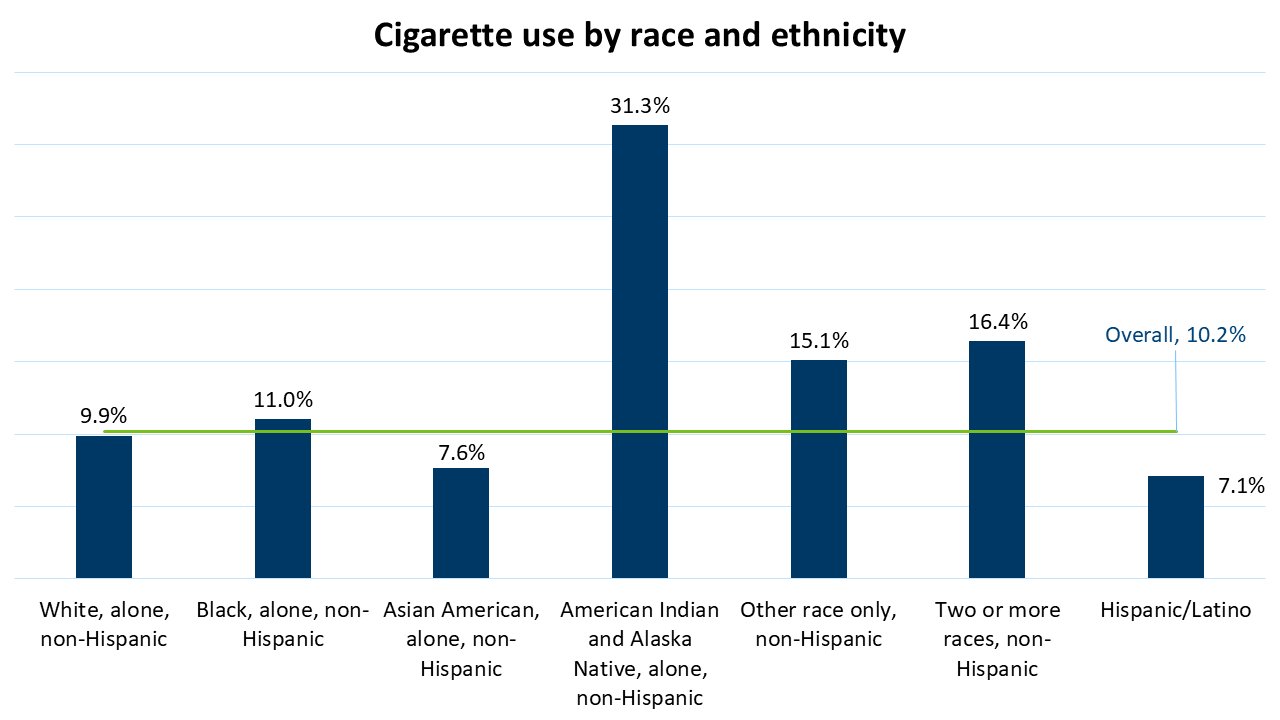
2024 data from Behavioral Risk Factor Surveillance System (BRFSS) show 10.2% of Minnesota adults smoke cigarettes. Among adults, cigarettes continue to be the most used commercial tobacco product. Data also show that while, overall, commercial tobacco use is declining, rates are not declining at the same pace for all communities. Significant disparities remain among populations historically targeted by the tobacco industry.
Local commercial tobacco use profiles

Below are local profiles that show commercial tobacco's toll in each county in one year. They also include local and statewide data on products stores sell, youth commercial tobacco use, and community solutions for reducing commercial tobacco use.