
Minnesota Department of Health logo
  • Main navigation

    • Home
    • Data, Statistics, and Legislation
    • Diseases and Conditions
    • Health Care Facilities, Providers, and Insurance
    • Healthy Communities, Environment, and Workplaces
    • Individual and Family Health
    • About Us
    • News and Announcements
    • Translated Materials

Main navigation mobile

  • Data, Statistics, and Legislation
  • Diseases and Conditions
  • Health Care Facilities, Providers, and Insurance
  • Healthy Communities, Environment, and Workplaces
  • Individual and Family Health
  • About Us
  • News and Announcements
  • Translated Materials
MDH Logo

Breadcrumb

  1. Home
  2. Diseases and Conditions
  3. Cardiovascular Health
  4. Minnesota 2035 Plan
Topic Menu

Cardiovascular Health

  • Cardiovascular Health Home
  • CVH Data and Trends
  • CVH Programs & Resources
  • Minnesota 2035 Plan
  • Minnesota Stroke Program
  • About Us

Learn More

  • About Heart Attacks
  • About Heart Disease
  • About High Blood Pressure
  • About High Cholesterol
  • About Stroke

Related Topics

  • Chronic Conditions
  • Diabetes
  • Nutrition
  • Physical Activity
  • Tobacco


Cardiovascular Health

  • Cardiovascular Health Home
  • CVH Data and Trends
  • CVH Programs & Resources
  • Minnesota 2035 Plan
  • Minnesota Stroke Program
  • About Us

Learn More

  • About Heart Attacks
  • About Heart Disease
  • About High Blood Pressure
  • About High Cholesterol
  • About Stroke

Related Topics

  • Chronic Conditions
  • Diabetes
  • Nutrition
  • Physical Activity
  • Tobacco


Contact Info
Cardiovascular Health Program
health.heart@state.mn.us
health.stroke@state.mn.us

Contact Info

Cardiovascular Health Program
health.heart@state.mn.us
health.stroke@state.mn.us

Southside Community Health Services: Transforming care to address hypertension

Depression and heart disease are common in Minnesota, but many people may not be aware there is a strong connection between the two conditions.

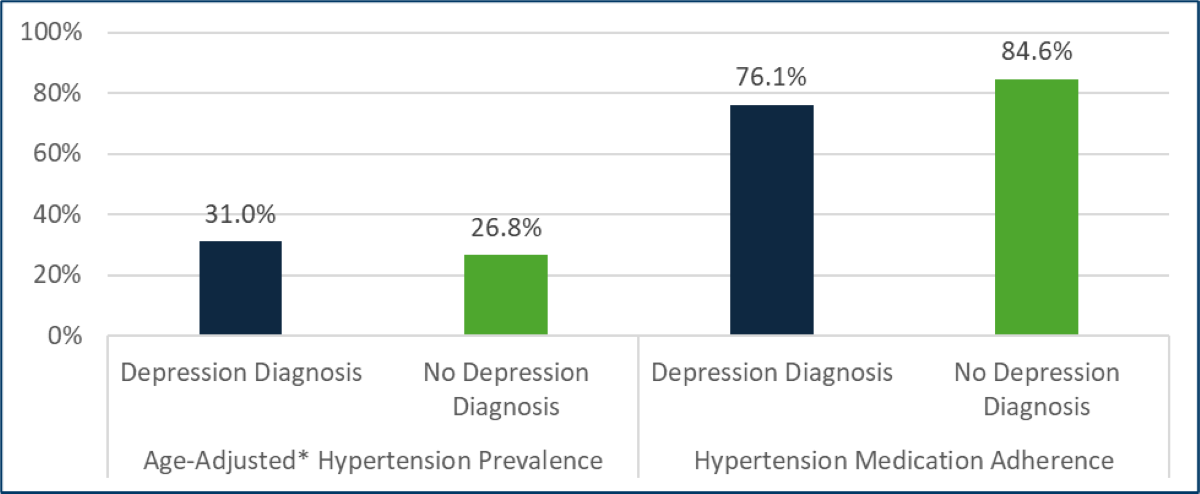
Minnesota adults with a history of depression are more likely to have hypertension than those without a history of depression (31.0% vs 26.8%). They are also less likely to take their hypertension medications as directed by their doctor (76.1% vs 84.6%). Depression increases the risk of developing heart disease and people with existing heart disease are more likely to become depressed.

Figure 1. Rates of hypertension and hypertension medication adherence in those with a depression diagnosis. 
Description above.

*Age-adjusted percentages are used when you want to understand differences between groups that are not due to one population being older or younger than the other. Age-adjustment is used here because younger people are more likely to report having depression and older people are more likely to have hypertension.

Southside Community Health Services, recognizing the overlap between depression and cardiovascular health, knew they needed to address their patients’ physical and mental health together. Southside, a Federally Qualified Health Center located in Minneapolis, is working to increase screening for clinical and social needs for all their primary care patients ages 18 and older. This meant they not only screened for things like blood sugar and blood pressure but developed a new wellbeing screening tool that prompted health care providers to also ask about mental health and things like housing, transportation, and food security, which can impact health. They also developed a quality improvement process to make sure patients who were diagnosed with depression, hypertension, or both, received appropriate ongoing care. 

The new wellbeing screening is currently being rolled out for dental patients at the clinic and will be expanded to vision patients in the future. 

Asking patients about their experience can help clinicians get a full picture of what is impacting the community. Alyssa Palmer, director of primary care integration, leads the clinic’s quality improvement efforts. “We can’t know what it’s like for people if we don’t ask,” said Palmer.

"There is so much silent suffering in our community. We wanted to address it." 
-Alyssa Palmer, director of primary care integration at Southside Community Health Services

Southside staff at all levels, from clinic staff to administrators, realized they all had personal stories and experiences with mental health. They also saw a gap in how the clinic supported community members and wanted to address it.

A new way of thinking

The clinic decided to approach this differently than previous initiatives. Traditionally, staff had not been engaged in clinical decision making and quality improvement. To better serve their patients, the clinic’s quality team decided to engage front line health workers (those who would be completing the work) to develop the process to integrate depression screenings into workflows.

Through all the ideas and feedback from staff, Southside developed a workflow that reflects the collaboration and dedication of all staff members. Medical assistants, front desk attendants, clinicians, dental providers, patient advocates, and even those behind the scenes, work together to make sure at-risk patients receive whole person care. 

The real success of this process was due to staff sharing their experiences and recognizing the need to help everyone who came through those doors. “We knew there was a problem, and we needed to pay attention to it,” said Palmer. “What gets paid attention, gets better. Everything comes down to connection between people.”

Image
A health care provider gives comfort to a patient

Enhancing workflows and improving care

At each visit, every patient completes the wellbeing screener with the option to opt out. Southside Community Health Services also uses the PHQ-9, a validated tool that assesses depression symptoms. They also ask patients questions from the GAD-7 regarding anxiety and a modified PRAPARE tool to learn more about social determinants of health that may impact the patient. 

Learn more about the screening tools:

  • PHQ-9 (PDF)
  • GAD-7 (PDF)
  • PRAPARE

If a patient indicates they may be at risk for depression, they get connected to a therapist or other behavioral health resources as needed in the clinic. Through the new process, therapists are available for consult on each shift and staff work to ensure patients feel safe and comfortable. 

If patients need more advanced services, the clinic refers them to outpatient care, community support programs, and more. They also provide more care coordination and help patients with scheduling appointments, transportation, and what they need to better manage their health. 

Because of the coordinated screening for both health-related social needs and mental health,  care providers at Southside Community Health Services gain a more comprehensive picture of their patients’ health and develop care plans that are better tailored to meet the needs of those who have been diagnosed with hypertension and/or depression. 

The workflow model that Southside developed not only has significantly improved how the clinic supports patients, but it can also be replicated for other initiatives and in other clinics. 

Screening rates in the clinic have drastically improved: depression screening went from 70% to around 90% and screening for social determinants of health went from 2% to 18.6% over the course of a year. 

Transformative healing

Southside Community Health Services sees nothing but opportunity from their success so far. The clinic is working to expand their current model for all their patients, including dental and vision. They also will expand from a focus on hypertension to other chronic conditions such as chronic kidney disease (CKD), diabetes, and more. The expansion of screening will help ensure medical providers provide care that addresses physical, mental, and social health for their patients.

In addition to new workflows and improved patient care, Southside Community Health Services leaders say that the clinic has become a more supportive workplace.  

According to Palmer, one of the biggest accomplishments has been through relational leadership. Throughout this process, Southside Community Health Services leaders showed transparency and vulnerability to shape how they showed up for clinic staff, patients, and everyone who comes through the door. Redefining what primary care means. 

"The work that we are doing requires us to do our own healing. It truly is transformative."
Tags
  • cardiovascular
Last Updated: 01/26/2026

Get email updates


Minnesota Department of Health logo

Privacy Policy
Equal Opportunity
Translated Materials
Feedback Form
About MDH
Minnesota.gov
  • Facebook
  • Twitter
  • Linked In
  • Instagram
  • Youtube
Minnesota Department of Health Minnesota Department of health print search share facebook instagram linkedin twitter youtube