
The number of schools providing the CHW Certificate has fluctuated over time across 11 different schools. In 2019 there were seven schools offering the program. In 2025 there were five. According to the Minnesota CHW Alliance Education Committee, the schools currently offering the CHW certificate are:
- Northwest Technical College
- St. Catherine University
- Minnesota West Community and Technical College
- Normandale Community College
- Anoka Community and Technical School
Mankato State University in the process of developing a program.
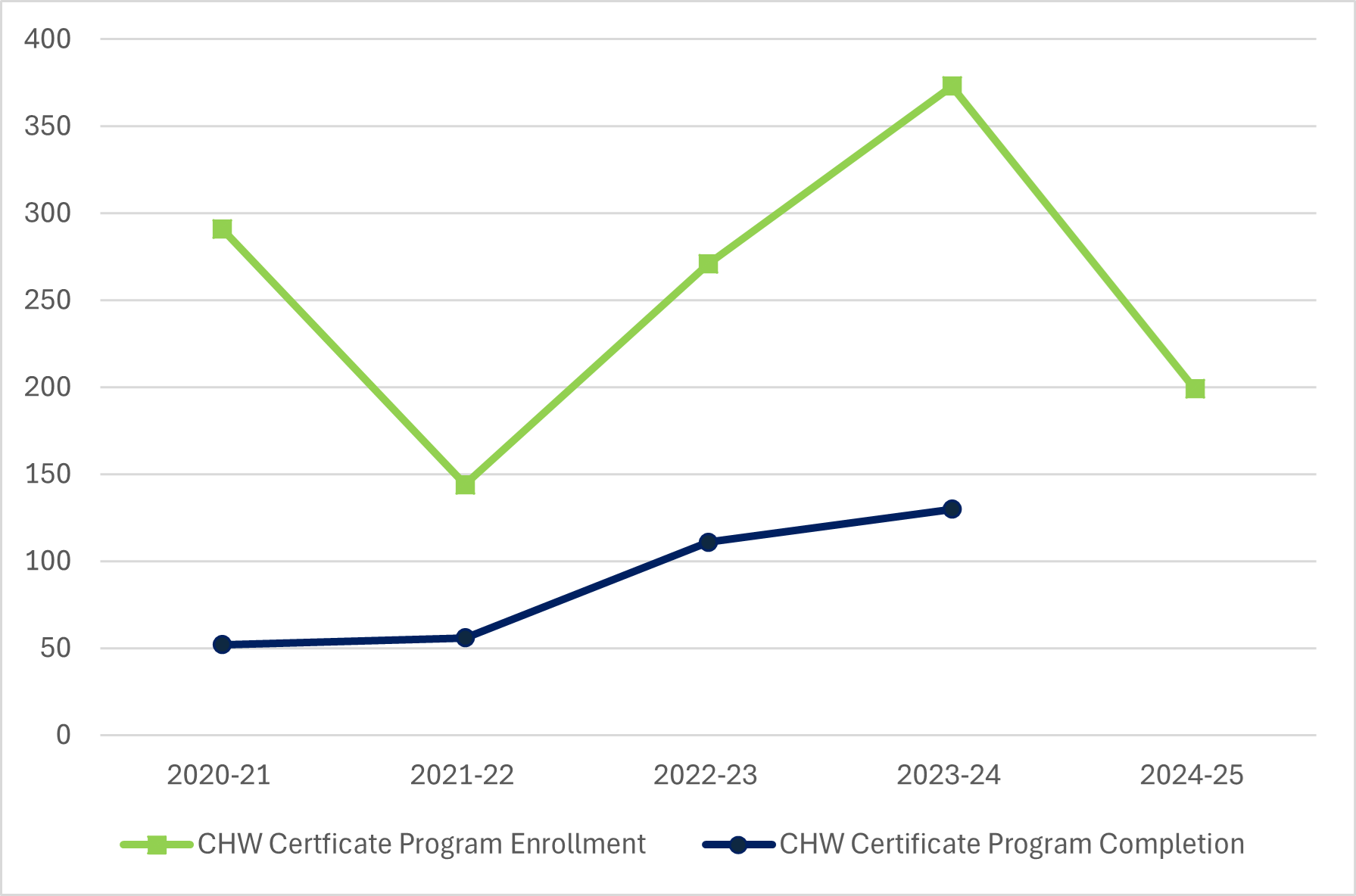
CHW Program enrollments and completions by year, 2020-2025
Source: Office of Higher Education, 2026
Over the last five years, enrollments and completions in the CHW Certificate Program have fluctuated. In the 2020-21 school year, there were 147 enrollments and 52 completions. In 2021-22, there were 144 enrollments and 56 completions. In 2022-23 academic year, there were 271 enrollments and 111 completions. In 2023-24, there were 373 enrollments across five programs and 130 completions. In 2024-25, there were 226 enrollments and 132 completions reported across five programs as of September 2026.
The six-year average for enrollment hovers at 227 and the 2025-26 enrollment is just below that average. The high was 373 in 2023-2024 academic year. While average count of certificate graduates is 96, there is steady growth in the number of graduates in the last five years. The high was 132 completions in the 2024-2025 academic year. The average CHW Certificate completion rate over the past five years was 42%.
For more information: Minnesota Community Health Worker Certificate Program Data (PDF)
Employment of CHWs has increased 43% in Minnesota since 2023.
Annually, the Minnesota Department of Employment and Economic Development (DEED) surveys employers around the state to produce the Occupational Employment and Wage Statistics. Community Health Workers are included in this data set and estimates are reported in the second quarter of the calendar year.
Total annual estimate of CHWs employed in Minnesota
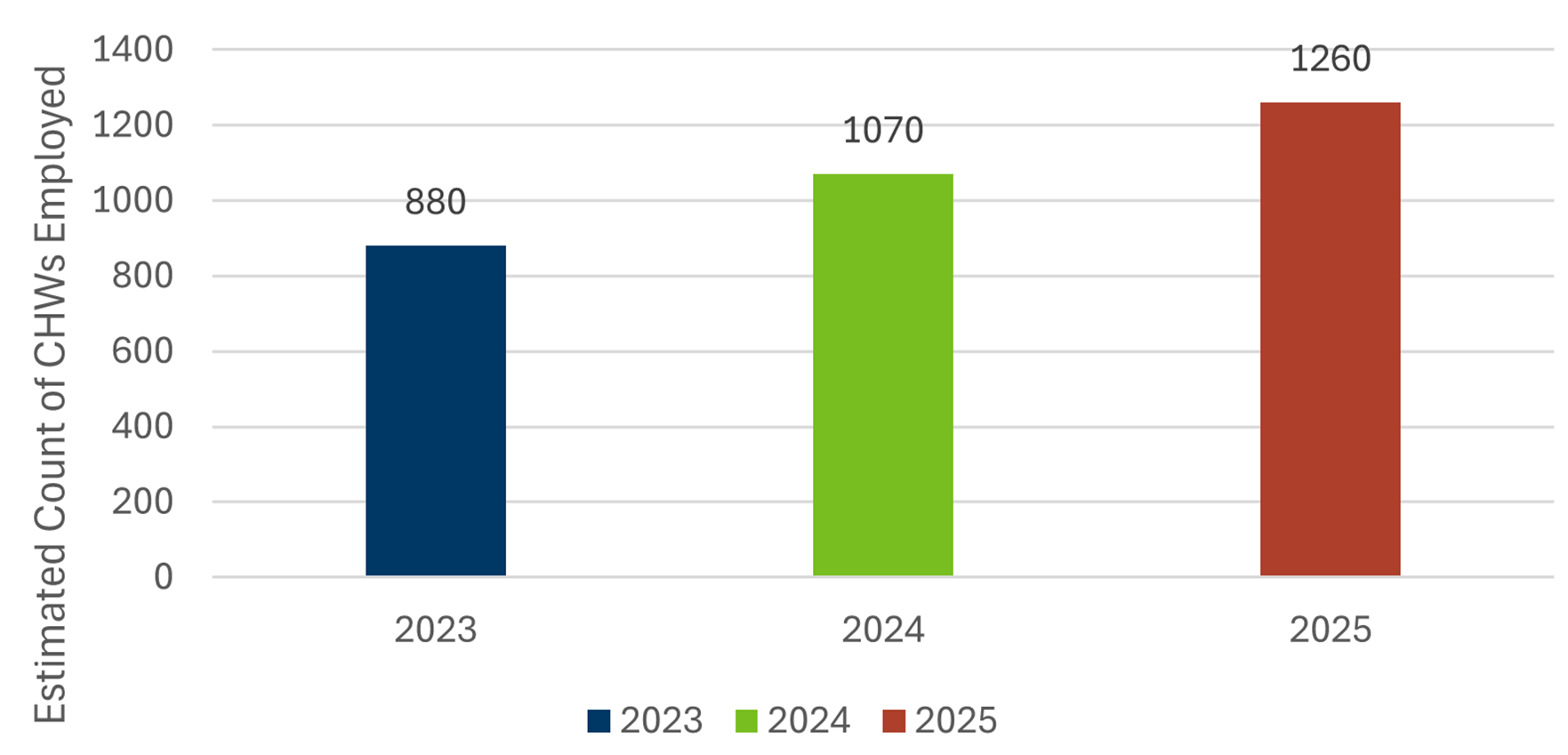
In 2025 there were an estimated 1260 CHWs working in Minnesota statewide. This is an increase from the estimated 1070 CHWs employed in 2024, and 880 CHWs employed in 2023. The Seven County Metro area had the highest estimate of employed CHWs, followed by the Southeast, Arrowhead, and Central economic development regions. The other geographic regions of the state have 30 or less CHWs per economic development region. In the link below there are detailed tables showing the estimates over three years by the thirteen Minnesota Economic Development Regions.
For more information: Minnesota Community Health Worker Employment Estimates (PDF)
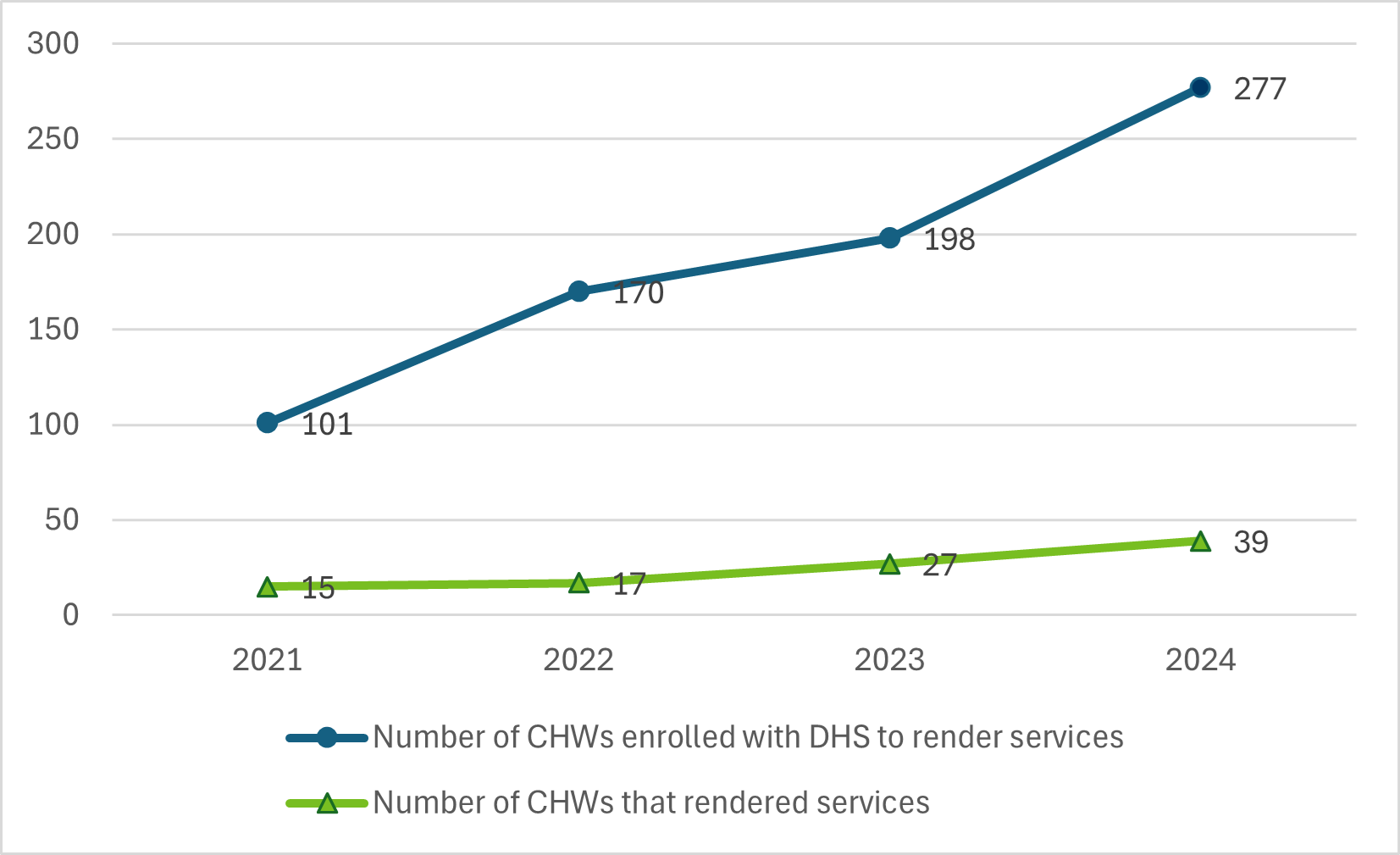
The number of CHWs enrolled with the Minnesota Department of Human Services (DHS) as CHW services providers and the number of CHWs rendering services to Minnesota Health Care Program (MHCP) participants show how many CHWs are eligible to provide billable services and how often Medicaid is currently being used to pay for them.
CHW enrollment with DHS to render services and services rendered 2021-2024
Source: Minnesota Department of Human Services, 2025
In 2024, there were 277 CHWs enrolled with DHS to render services and 39 CHWs that rendered services. In 2024, only 14% of those enrolled billed for services rendered, which is a steady, but slight increase from 9% in 2021, 10% in 2022, and 13% in 2023.
In 2025, the CHW Billing Toolkit was developed in response to barriers identified by CHWs and CHW service organizations in understanding enrollment and rendering billable CHW services in Minnesota. The toolkit can be found here: Community Health Worker Resources for Employers.
For more information: Minnesota Community Health Workers Enrolled with DHS as Billable Providers (PDF)