
Occupational Respiratory Health
Work-related respiratory diseases can occur to workers in many industries. Dust particles, chemicals, fungal spores, and other exposures in the work place can all contribute to respiratory health issues. The National Institute for Occupational Safety and Health (NIOSH) estimates that national deaths from work-related respiratory diseases and cancers account for about 70% of all occupational disease death.
Mesothelioma is a type of cancer of the membrane lining the chest or abdomen, and is linked to asbestos exposure. Following safety guidelines and using appropriate protective equipment are key strategies for preventing mesothelioma.
Number of Mesothelioma Cases by Year
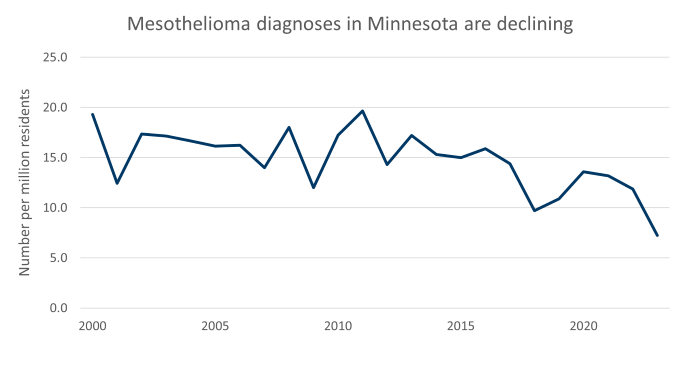
Data Source: Minnesota Cancer Reporting System and American Community Survey data
Numbers shown are the age-standardized annual rate per million Minnesota residents
Mesothelioma diagnoses in Minnesota:
The age standardized rate of new mesothelioma diagnoses in Minnesota held steady from 2000 to 2010, and has generally declined since then. Worker exposure to asbestos was reduced in recent decades and this may be result of that change. Data are from the Minnesota Cancer Reporting System, which tracks new cancer diagnoses. Denominator data are from the Current Population Survey (CPS).
Work-related asthma is triggered by exposures at work. Asthma is a chronic condition that affects the lungs and causes the airways to be restricted, making breathing difficult. Using prescription medications and avoiding triggers that cause symptoms is a key strategy to control asthma.
Number of Minnesota Workers with Work-Related Asthma
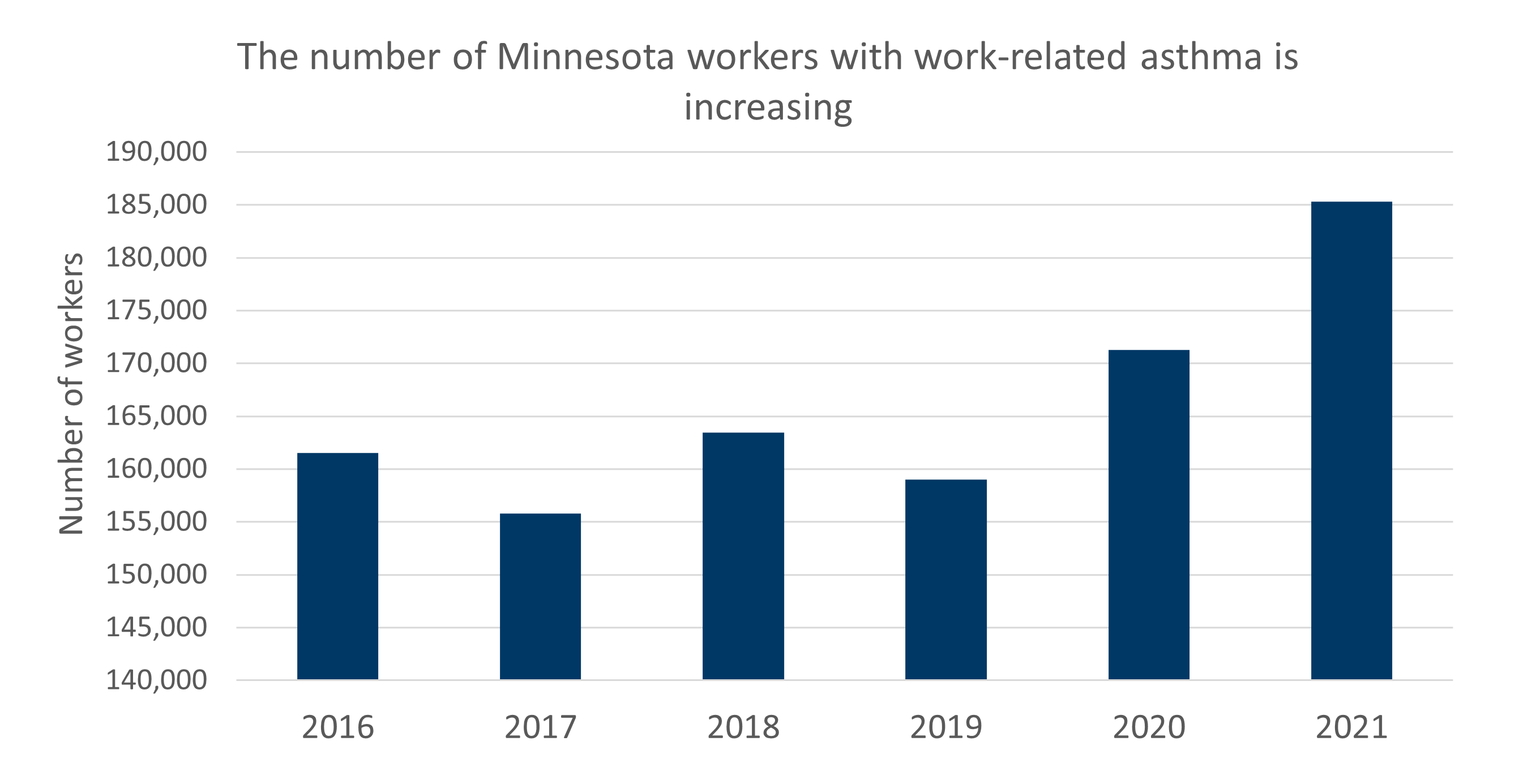
Data measure: Weighted estimate of the number of ever-employed adults with current asthma who report that their asthma was
caused or made worse by exposures at work.
Data source: Behavioral Risk Factor Surveillance System Asthma Call-Back Survey
Work-related asthma:
The number of ever-employed adults with asthma in Minnesota who report that their asthma was caused or made worse by exposures at work has generally increased since 2016. The proportion of these workers whose asthma was caused or made worse by work dropped in 2018 and 2019, but increased in 2020 and 2021. Data are from the Asthma Call-Back Survey, which is administered to a subset of respondents to the Behavioral Risk Factor Surveillance System.
Health Care Personnel Influenza Vaccination Coverage:
The percent of Minnesota health care workers who work in acute care hospitals and have been vaccinated for influenza has remained steady at about 75-85% since 2014. Data are from the National Healthcare Safety Network and are published by CDC.