Minnesota Department of Health logo
  • Main navigation

    • Home
    • Data, Statistics, and Legislation
    • Diseases and Conditions
    • Health Care Facilities, Providers, and Insurance
    • Healthy Communities, Environment, and Workplaces
    • Individual and Family Health
    • About Us
    • News and Announcements
    • Translated Materials

Main navigation mobile

  • Data, Statistics, and Legislation
  • Diseases and Conditions
  • Health Care Facilities, Providers, and Insurance
  • Healthy Communities, Environment, and Workplaces
  • Individual and Family Health
  • About Us
  • News and Announcements
  • Translated Materials
MDH Logo

Breadcrumb

  1. Home
  2. Healthy Communities, Environment and Workplaces
  3. Environments and Your Health
  4. Children's Environmental Health
Topic Menu

Children's Environmental Health

  • Children's EH Home
  • New! CEH Resources
  • Background
  • Special Concerns
  • A Broader Look
  • Changes in Risks
  • Risks Around the World
  • Hazards
  • Emerging Issues
  • Future
  • References
  • Toxic Free Kids Program
  • Chemicals of Special Concern
  • Initiatives

Related Topics

  • School 
    Environmental Health
  • Healthy Homes
  • Lead
  • Safe Drinking Water for your Baby
  • Birth Defects
  • Children and Youth with Special Health Needs
  • Newborn Screening
  • Fish Consumption
  • Healthy Kids Minnesota

Environmental Health Division

  • EH Division Home

Children's Environmental Health

  • Children's EH Home
  • New! CEH Resources
  • Background
  • Special Concerns
  • A Broader Look
  • Changes in Risks
  • Risks Around the World
  • Hazards
  • Emerging Issues
  • Future
  • References
  • Toxic Free Kids Program
  • Chemicals of Special Concern
  • Initiatives

Related Topics

  • School 
    Environmental Health
  • Healthy Homes
  • Lead
  • Safe Drinking Water for your Baby
  • Birth Defects
  • Children and Youth with Special Health Needs
  • Newborn Screening
  • Fish Consumption
  • Healthy Kids Minnesota

Environmental Health Division

  • EH Division Home
Contact Info
Environmental Surveillance and Assessment (ESA) Section
651-201-4899
health.risk@state.mn.us

Contact Info

Environmental Surveillance and Assessment (ESA) Section
651-201-4899
health.risk@state.mn.us

Children's Environmental Health

children collage

Children's environmental health is an important concern to the Minnesota Department of Health (MDH). We are increasing focus and attention on children and working in partnership with other agencies and organizations to protect children from exposures to harmful chemicals and other environmental health hazards.

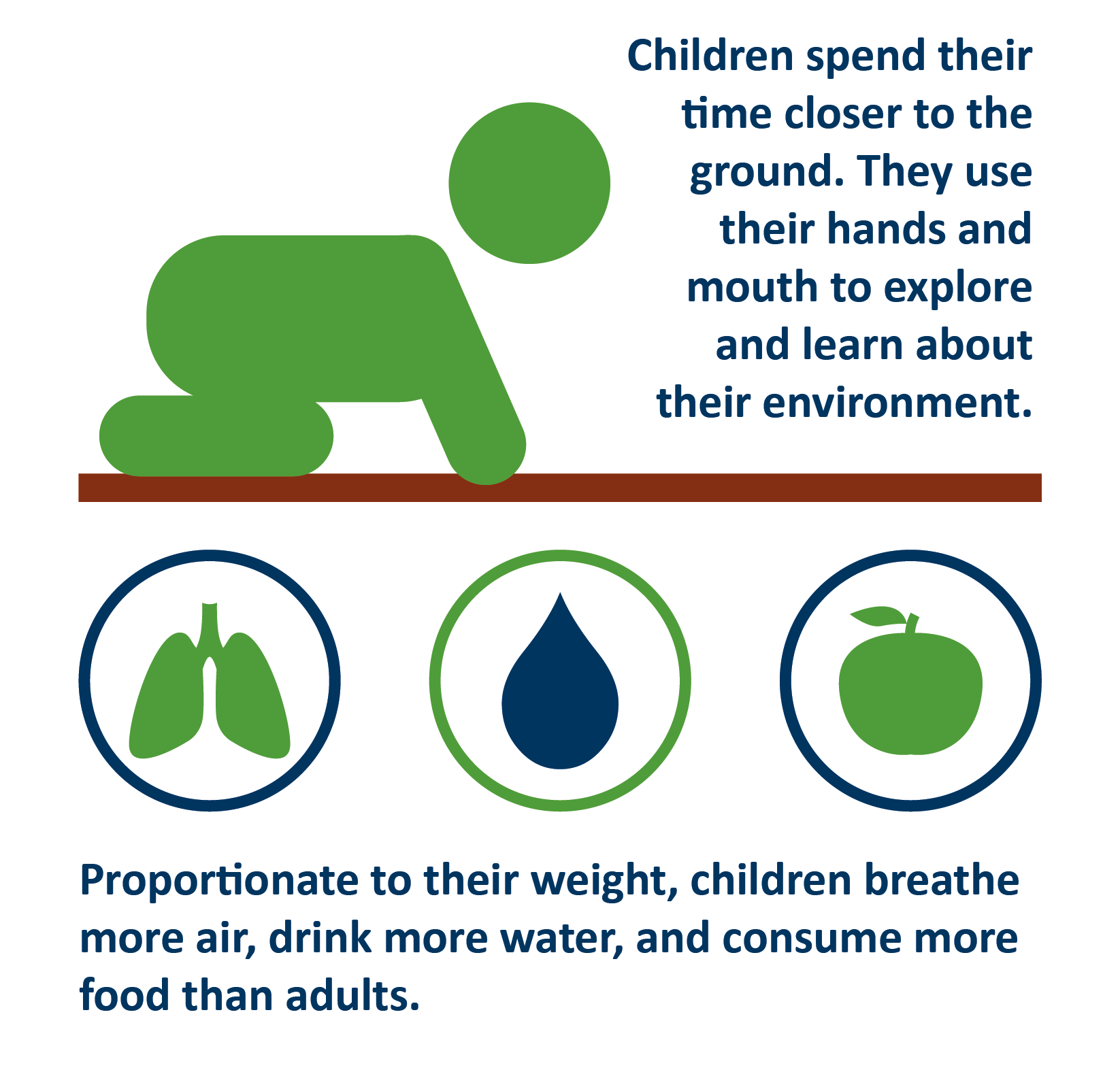
  • Children may be more exposed and more vulnerable to hazards in the environment.
  • Pound for pound per body weight, kids breathe more air, drink more fluids, and eat more food than do adults.
  • Kids are also developing, so they may be more vulnerable to exposures than adults.

The MDH houses many programs with a special emphasis on children.

  • Toxic free Kids
  • Fish advisories for pregnant women and children
  • Assessing risks to children from sites with hazardous waste
  • Healthy school environments
  • Food safety for youth
  • Biomonitoring projects
 

For more information on these programs and other MDH programs focusing on children's environmental health, visit MDH Initiatives.

Of interest

  • Free on-line continuing education modules and courses: Pediatric Environmental Health Training
  • EPA | Protecting Children's Environmental Health
    Environmental Health Disparities

Back to top

Tags
  • environment
Last Updated: 01/27/2026

Get email updates


Minnesota Department of Health logo

Privacy Policy
Equal Opportunity
Translated Materials
Feedback Form
About MDH
Minnesota.gov
  • Facebook
  • Twitter
  • Linked In
  • Instagram
  • Youtube
Minnesota Department of Health Minnesota Department of health print search share facebook instagram linkedin twitter youtube