
Transforming Minnesota's Public Health System
- Home: System Transformation
- About This Work
- Framework of Foundational Responsibilities
- Definitions, Criteria, and Standards for Fulfillment
- Joint Leadership Team
- Minn. Infrastructure Fund and Local Innovation Projects
- Governance Groups and Communities of Practice
- Data Modernization
- Regional Data Models
- Tribal Public Health Capacity and Infrastructure
- FPHR Grant: Funding for Foundational Responsibilities
- Reports, Fact Sheets, Resources
- News & Blog: Public Health System Transformation Update
- Message Toolkit
Related Sites
Contact Info
Foundational Work Moves from the Backburner to the Table
How Minnesota’s community health boards used FPHR Grant funding in 2024
Public Health System Transformation Update Newsletter
December 2025 | View all system transformation newsletters
Minnesota’s community health boards are helping their communities thrive, by using sustainable funding sources like the Foundational Public Health Responsibilities Grant (FPHR Grant) to grow capacity in foundational public health responsibilities.
"We are thrilled to implement projects that have long been on the agency's back burner. With new full-time equivalents (FTEs) and resources now available, we can finally take action on these initiatives, driving our mission forward."
Local public health builds capacity in all 13 foundational responsibilities
In 2024, Minnesota’s community health boards addressed all 13 foundational public health responsibilities in their FPHR Grant workplans.
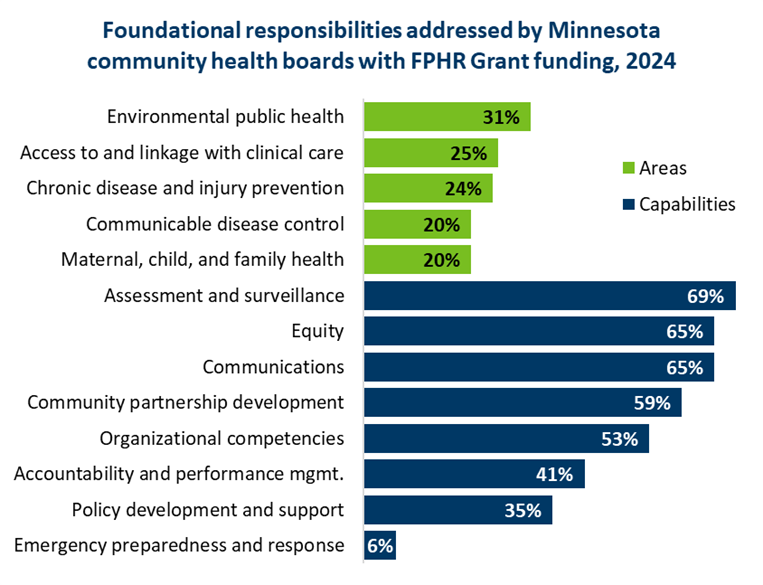
Growing foundational capacity happened in big and small ways; some are newly discovered, and some long-desired:
- Strategically expanding workforce
- Growing capacity for community engagement and health equity
- Improving communications and visibility
- Increasing infrastructure for data and assessment
- Changing policies and systems to improve population health
- Expanding strategic and operational planning
"Our community health assessment survey collection plan covered multiple ways to collect survey responses. Our original target for survey responses was 450 and we far exceeded that number. Respondents covered multiple ages, cultures, languages, etc. One of the best representations from our county to date."
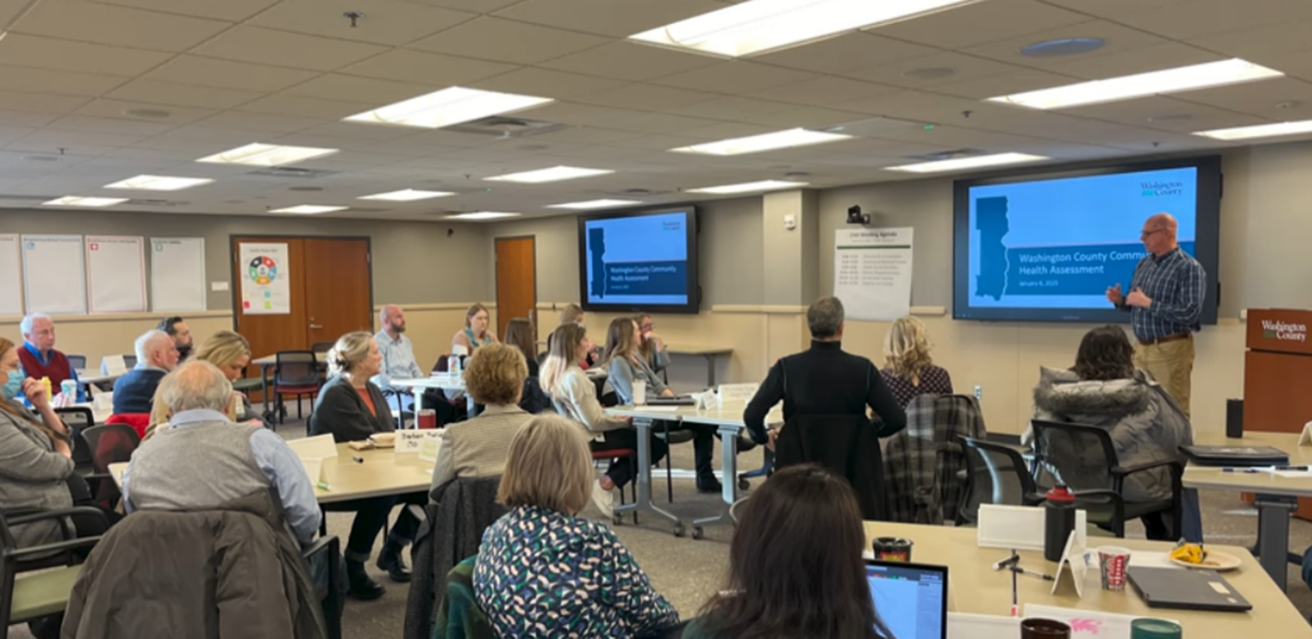
Above: Washington County Public Health and Environment staff convene community members to talk about the county's community health assessment. Photo credit: Washington County Public Health and Environment.
Community health boards encountered challenges along the way, including:
- Delays in approval, hiring, and onboarding of new positions
- Budget adjustments and carryover planning
- Staff turnover and transition
- Community engagement
- Infrastructure for data and information technology
- Braiding funding and coordinating grants
- Organizational development and change management
“I appreciate being able to bring in contractors for strategic planning… Bringing in additional support allowed our planner and steering committee to be fully engaged participants and not also play the role of facilitator.”
Ideas to maximize FPHR Grant funding
As Minnesota’s public health landscape continues to evolve, community health boards may wish to consider the following ideas as they use FPHR Grant funding in the future:
- Facilitate shared staffing models
- Prioritize onboarding and mentorship
- Streamline data tools and support
- Build local leadership capacity
- Standardize equity approaches
- Expand technical and finance staffing
- Support staffing sustainably
- Strategically plan for delays
- Enhance performance management
"The time we can spend on communication—this is such a difference. We have developed [presentations] to communicate to commissioners, fiscal, [health and human services] directors—this is such a big deal. I am so proud of the internal and external communication… We are looking like an organization that is reputable, with well thought communication to each other, our partners, and most importantly, our community.”
Dig into the report
Learn more about each of the sections above along with thoughts and comments directly from Minnesota’s local public health workforce: Foundational Public Health Responsibilities Grant: 2024 Annual Report (PDF).