
Fish Consumption
- Fish Consumption Home
- Waterbody-specific, Northeast, and Statewide Guidelines
- Contaminants and Minnesota Fish
- Order Fish Consumption Materials
- Eating Fish: Benefits and Serving Size
- Resources, Reports & Technical Information
- Great Lakes Consortium
- Information in Other Languages
Related Topics
Environmental Health Division
Contact Info
Fish Consumption Guidance Updates for Minnesota Waterbodies
Updated March 2026
Minnesota Department of Health (MDH) is updating fish consumption guidelines due to mercury and per-and polyfluoroalkyl substances (PFAS) found in fish from some waterbodies in Minnesota. The updated guidelines primarily focus on mercury and PFAS data but are also protective for polychlorinated biphenyls (PCBs). MDH reviews contaminants in fish caught from Minnesota waterbodies and provides regular updates to the public.
The Fish Consumption Guidance program is updating fish consumption guidelines following its review of data, including updating statewide and waterbody-specific guidelines and adding new regional guidelines for Northeast Minnesota related to updated mercury analyses and updating PFAS-related guidelines for the Vermillion River in Dakota and Scott counties.
For fish caught in Minnesota lakes, check LakeFinder on the Department of Natural Resources (DNR) website to see if there is a fish consumption guideline. LakeFinder connects you to fish consumption guidance for all Minnesota lakes.
For fish caught in Minnesota rivers, review the updated list of Waterbody-specific Guidelines for rivers on the Waterbody-specific, Northeast, and Statewide Fish Consumption Guidelines webpage.
For the new Northeast and updated Statewide Fish Consumption Guidelines visit our Waterbody-specific, Northeast, and Statewide Fish Consumption Guidelines webpage.
MDH’s fish consumption guidance is intended to provide Minnesotans with the information they need to make informed choices for the health and safety of their family. Fish consumption guidance depends on:
- Where you caught the fish. Some waterbodies have Waterbody-specific Guidelines due to elevated levels of PFAS, mercury, or PCBs. Fish from waterbodies in Northeast Minnesota generally have higher mercury concentrations than fish from waterbodies in other regions of the state.
- Who you are. Some people are more sensitive than others to negative health effects from exposure to mercury and PFAS. Mercury and PFAS, including perfluorooctane sulfonate (PFOS), build-up in people over time with high exposure and potential for health effects to developing humans. This means that pregnancy, infancy, and childhood all represent specific life stages of concern for mercury and PFAS exposures. The most sensitive groups include children under age 15; girls, women, and people age 15 and older who may become pregnant, people who are pregnant, people who are breastfeeding or plan to breastfeed.
- The fish you catch. A fish’s species and size may affect consumption guidance. The maximum number of servings recommended per week or month may vary among fish species caught in the same waterbody. Longer fish tend to have higher mercury concentrations.
Mercury-related guidance updates
MDH is updating our mercury analyses for some fish species in some waterbodies. The updated mercury analyses improve the estimates of mercury concentrations in fish tissue; create separate and more protective guidelines for Cook, Lake, and St. Louis counties; and include length-based guidance for sensitive populations.
Map: MDH issues new Northeast Fish Consumption Guidelines for Cook, Lake, and St. Louis counties (March 2026)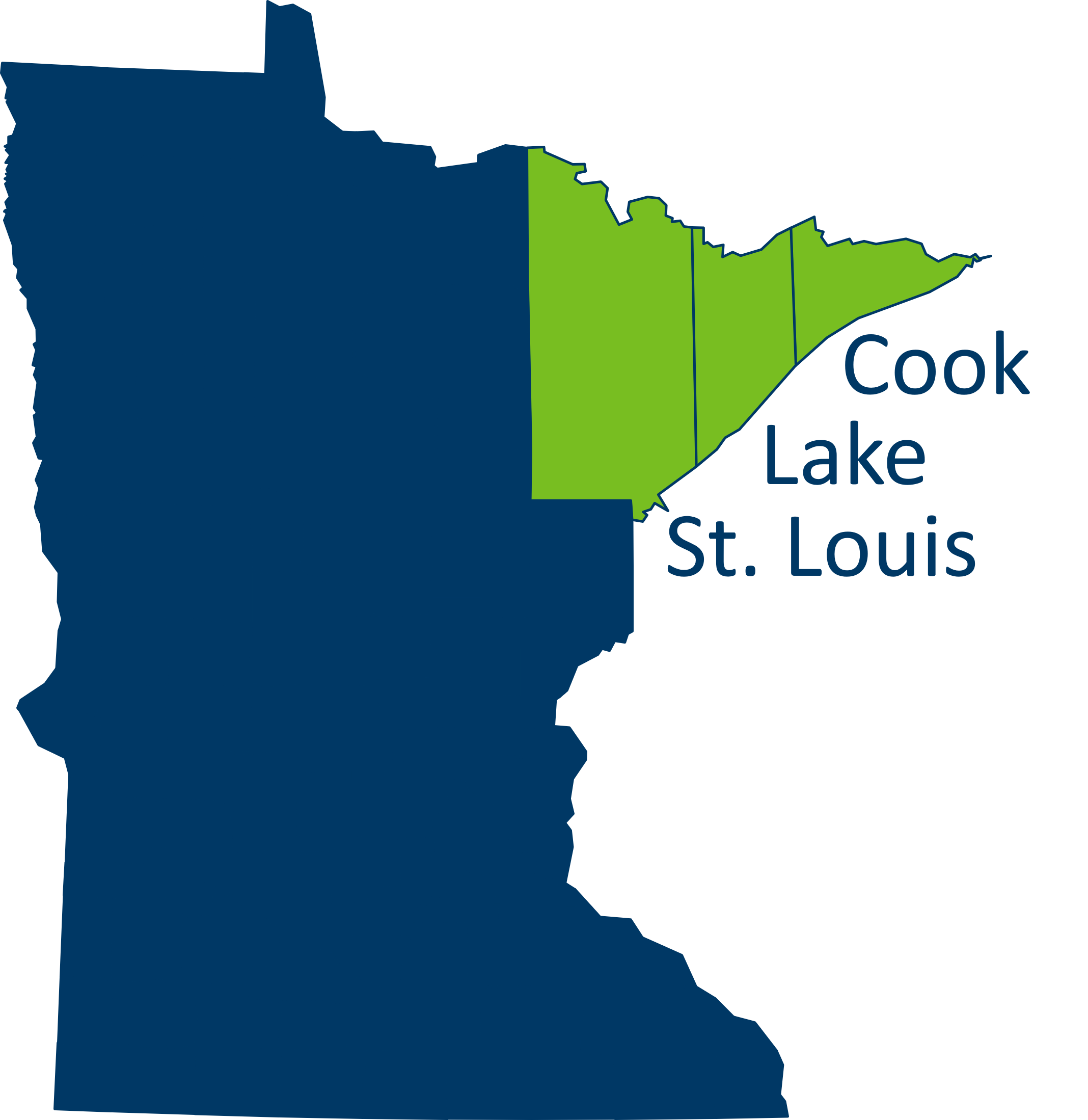
Mercury is a toxicant that impacts the nervous system. The most sensitive life stages for neurotoxicity occur during pregnancy to the fetus, and in infancy through childhood when understanding and learning can be impacted.
More information on the updated mercury analyses can be found here:
More information on mercury health impacts can be found here:
PFAS-related guidance updates
MDH’s analysis of fish data shows mixtures of per- and polyfluoroalkyl substances (PFAS) in the tissue of fish pulled from the Vermillion River upstream of Hastings Dam (Dakota and Scott counties) at levels that could have negative health impacts.
Map of Vermillion River and tributaries upstream of Hastings Dam and others connected to Mississippi River Pool 3.
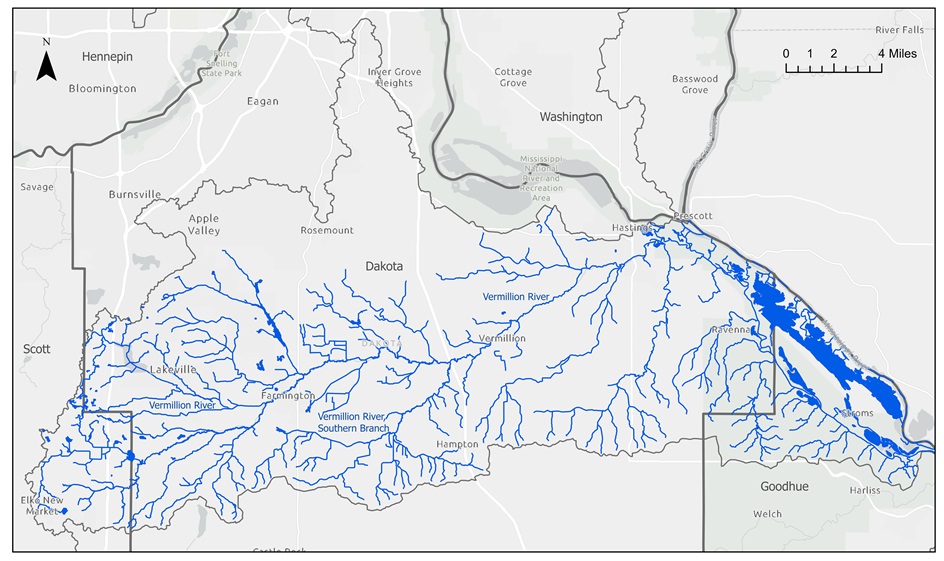
The fish consumption guidelines for the Vermillion River, its tributaries, and other tributaries connected to Mississippi River Pool 3 are:
- Sensitive populations: for all fish species, do not eat
Sensitive populations include: children under age 15; girls, women, and people age 15 and older who may become pregnant, people who are pregnant, people who are breastfeeding or plan to breastfeed. - General populations: eat up to 1 serving a month of 1 fish species
General populations include: people not planning to become pregnant; boys and men age 15 and older.
Eating fish is just one way people are exposed to PFAS. PFAS are present in many consumer products, environments, workplaces, and homes. Minnesota has been taking action to eliminate PFAS for many years. As we learn more about PFAS in fish, MDH will update fish consumption guidance as needed.
More information on reducing exposures to PFAS can be found here:
April 8th fish consumption guidance webinar
The Fish Consumption Guidance Program held a webinar on April 8th, 2026, on the updated guidance. The slides from this webinar are now available: Minnesota Fish Consumption Guidance Updates Summary (PDF)
If you have questions about fish consumption guidance, please contact us at HEALTH.fish@state.mn.us.