
Contact Info
About Sickle Cell Disease
On this page
What is sickle cell disease?
Causes
Sickle cell trait
Types of sickle cell disease
Diagnosis and treatment
Supporting individuals with sickle cell disease
Sickle cell disease in newborns
Specialty clinics
What is sickle cell disease?
Sickle cell disease (SCD) is a group of conditions that affect the red blood cells. Normal red blood cells are round and flexible. A person with sickle cell disease has red blood cells that are hard, sticky, and crescent-shaped like crescent moons or sickles. People with sickle cell disease often experience intense pain and anemia because of their abnormal red blood cells.
SCD is one of the most common hereditary disorders in the United States, affecting 1 in 1,900 infants. Of the 66,000 infants born in Minnesota annually, about 25 infants are born with SCD and more than 1,000 infants are born with a sickle cell trait (SCT).
Individuals with SCD face adverse health outcomes such as a reduced life expectancy. Who does SCD affect?
- SCD primarily, although not exclusively, affects African Americans and other Black populations. Approximately 1 out every 12 African Americans has SCT, while SCD occurs among 1 out of every 365 African American births.
- SCD also occurs in about 1 in every 16,300 Hispanic-American births.
- SCD is most common in individuals who come from and whose ancestors are from Africa, India, South America, Saudi Arabia, and Mediterranean countries such as Turkey, Greece, and Italy.
The Many Faces of Sickle Cell Disease
Causes
SCD is a genetic condition that is passed on to a child from their parents. SCD is a recessive condition, meaning people who have SCD inherit the sickle cell gene from both their mother and father.
SCD is not an infectious disease, and cannot be passed from one person to another, except by birth.
Sickle cell trait
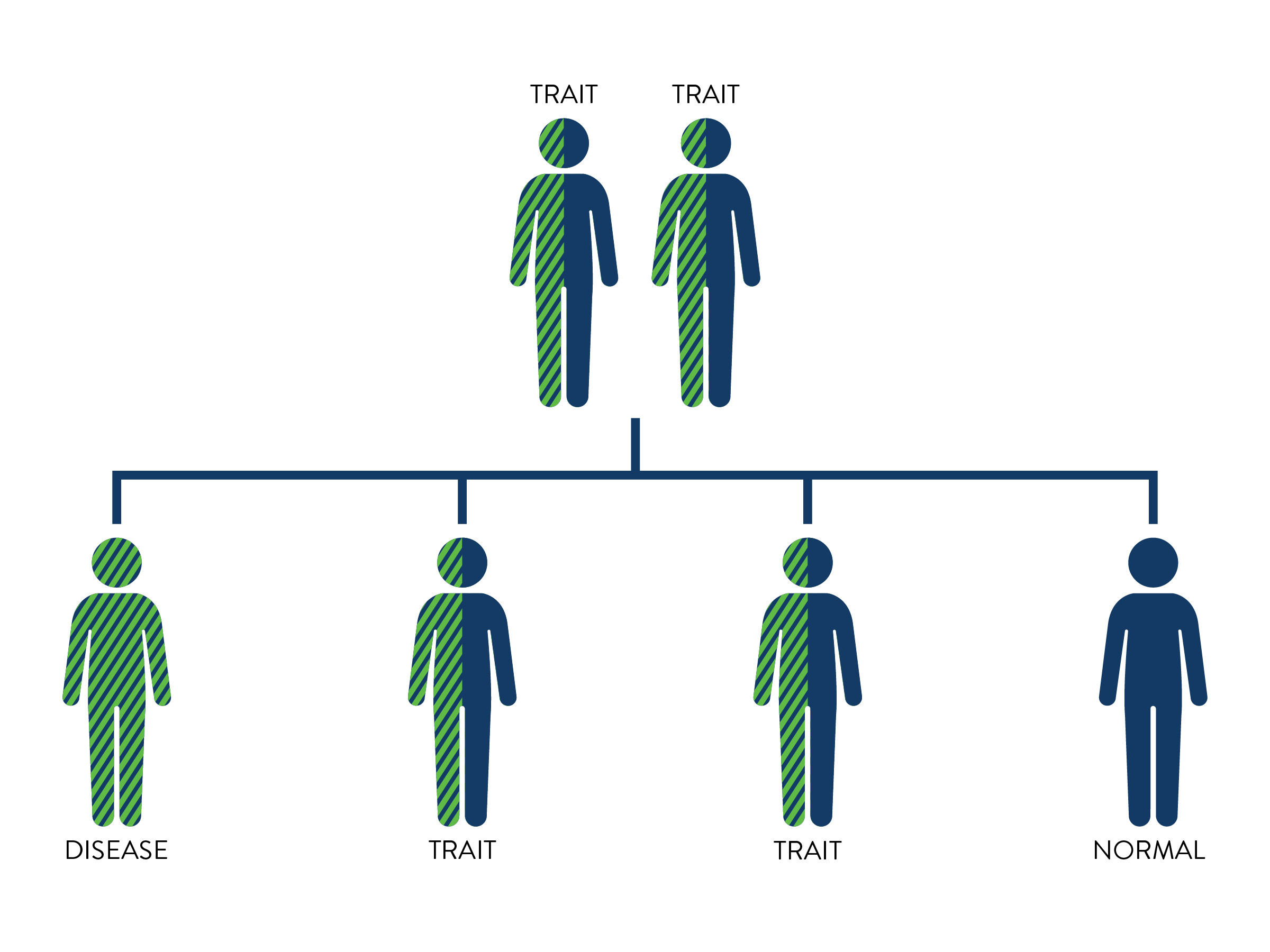
A person who inherits the sickle cell gene from only one parent has the sickle cell trait (SCT) and usually will not have the symptoms of sickle cell disease. However, they may pass this gene onto future children. If both parents have SCT, it is more likely that their children may have SCD.
If one parent has SCT, there is a 50% chance of having a baby with SCT.
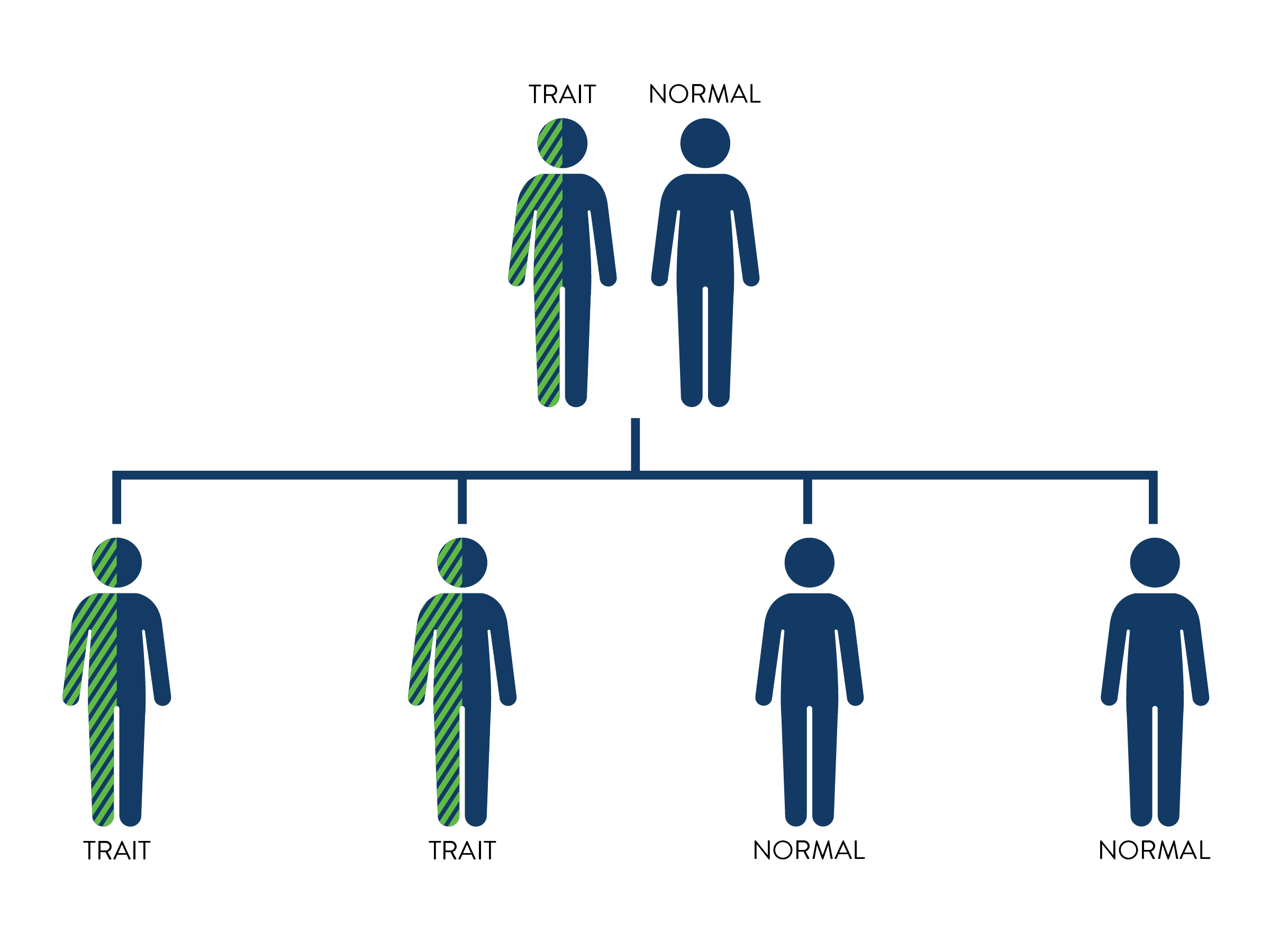
If both parents have SCT, there is a 25% chance of having a baby with sickle cell disease (SCD) and 50% chance of having a baby that has sickle cell trait (SCT).
Types of sickle cell disease
There are several different types of sickle cell disease; the most common types, found during newborn screening, are sickle cell anemia (S/S), sickle hemoglobin C (S/C), and sickle-cell beta thalassemia (Sß+ thal or Sß0 thal).
- S/S = Most common and severe type of SCD. Inherit one sickle gene from each parent. Also called sickle cell anemia.
- S/C = Inherit one sickle cell gene from one parent and one ‘C’ gene from the other parent. HbSC usually causes mild to moderate symptoms.
- S/ß0 thal and S/ß+thal = In both, a person inherits a hemoglobin "S" gene from one parent and a gene for beta-thalassemia, another type of hemoglobin abnormality, from the other parent. There are two types of beta thalassemia: "zero" (HbS beta0) and "plus" (HbS beta+). Those with HbS beta0-thalassemia usually have a severe form of SCD. People with HbS beta+-thalassemia tend to have a milder form of SCD.
- Other = more rare variations of sickle cell disease include sickle hemoglobin D (SD), sickle hemoglobin E (SE) and sickle hemoglobin O (SO).
- Type pending = Sickling disorder due to hemoglobin S, type pending. (This term is uncommonly used and primarily exists for data grouping purposes)
Diagnosis and treatment
Sickle cell disease is usually diagnosed at birth through a blood spot test, which is part of the Newborn Screening Program. A blood test can also be performed at any time for those not screened at birth.
Daily treatment with an antibiotic called penicillin helps lower children’s chance of having a serious infection in the bloodstream. It is available as a liquid for babies and young children and as tablets for those who are older.
Many healthcare providers stop prescribing penicillin after a child turns 5 years old. Some providers prefer to continue to prescribe this antibiotic throughout a person’s life. Those who have had surgical removal of the spleen (called a splenectomy) or pneumonia caused by bacteria called pneumococcus should keep taking penicillin.
Treatment can help relieve symptoms and complications of SCD, which vary and can range from mild to severe. Treatment will be different for each person based on what symptoms they have. The goals of treating SCD are to prevent and relieve SCD complications, including pain, infections, organ damage, and strokes. Treatments can include:
- Receiving blood transfusions
- Receiving IV (intravenous) therapy (fluids given into a vein)
- Taking pain relievers
- Taking an FDA-approved medication, such as Hydroxyurea, Crizanlizumab, or L-glutamine
A blood or marrow transplant is a procedure that takes healthy stem cells from a donor and puts them into someone else. These healthy stem cells cause the bone marrow to make new cells that are not in the sickle shape. Many people do well after a BMT and experience significant improvement in their quality of life. However, there are risks associated with transplants. Discuss eligibility for transplant and associated risks and benefits with a transplant doctor.
Researchers are studying a new potential cure through gene therapy. Right now, gene therapy is only available in clinical trials.
Supporting individuals with sickle cell disease
If you would like to participate in efforts to support those living with SCD, visit
Blood and marrow donation
Blood transfusions are an effective treatment to help those with SCD. Donating blood can help save lives. Diverse donors are needed.
Learn more:
- Red Cross Blood Services: African American Blood Donors
- Red Cross: Join the Fight Against Sickle Cell Disease
- Memorial Blood Centers: Sickle Cell Donor Program
People with SCD who are eligible for a blood and marrow transplant may match with a healthy sibling donor. Donors may also be found through the National Marrow Donor Program. Consider joining, diverse donors are needed!
Support and services
- National Institute of Health Clinical Trials
- NMDP: Clinical Trials Search and Support
- MDH: Children and Youth with Special Health Needs
- National Heart, Lung, and Blood Institute Clinical Trials: Sickle Cell Disease
- Sickle Treatment & Outcomes Research in the Midwest (STORM)
- NASEM: Sickle Cell Disease in Social Security Disability Evaluations
Sickle cell disease in newborns
- Health Resources & Services Administration Newborn Screening:
- MDH: Newborn Screening Information for Families: Hemoglobin and Sickle Cell Trait
- MDH: Newborn Screening Materials: Sickle Cell Disease
- MinneStories: Fierce Advocate
Specialty clinics
- Children's Minnesota: Hemoglobinopathy and Sickle Cell Disease
- M Health: Sickle Cell Disease
- Mayo Clinic: Sickle cell anemia doctors and departments
- Hennepin Healthcare: Sickle Cell Program