
Secondary menu

  • About Us
  • News & Stories
  • Translated Materials
Minnesota Department of Health logo
  • Data, Statistics, and Legislation

    Data, Statistics, and Legislation

    Statistical reports, health economics, policy, and legislation.
    Data, Statistics, and Legislation
    • Community Health
    • Diseases and Conditions
    • Environmental Health
    • Health Behaviors and Risk Factors
    • Health Care Cost and Quality
    • Reporting and Exchanging Data
    • Legislation and Policy
  • Diseases and Conditions

    Diseases and Conditions

    A-Z disease listing, diseases and conditions by type.
    Diseases and Conditions
  • Health Care Facilities, Providers, and Insurance

    Health Care Facilities and Providers

    Directories of facilities, professional certifications, health insurance and patient safety.
    Health Care Facilities and Providers
    • Facility Certification, Regulation and Licensing
    • Insurance
    • Health Information Technology
    • Provider Certifications, Licenses, Registrations and Rosters
    • Patient Health and Safety
    • Health Care Homes
    • Notices Related to Health Records
    • Rural Health and Primary Care
    • Trauma System
  • Healthy Communities, Environments, and Workplaces

    Healthy Communities, Environments, and Workplaces

    Indoor air and drinking water quality, community prevention and emergency preparedness.
    Healthy Communities, Environments, and Workplaces
    • Community Wellness and Health Equity
    • Healthy Schools and Child Care
    • Healthy Businesses and Workplaces
    • Local Public Health
    • Environments and Your Health
    • Safety and Prevention
    • Emergency Preparedness and Response
    • Equitable Health Care Task Force
    • Transforming the Public Health System in Minnesota
  • Individual and Family Health

    Individual and Family Health

    Birth records, immunizations, nutrition and physical activity.
    Individual and Family Health
    • Vital Records and Certificates
    • Disabilities and Special Health Needs
    • Disease Prevention and Symptom Management
    • Healthy Aging
    • Healthy Children, Youth and Adolescents
    • Mental Health and Well-being
    • Reproductive Rights and Protections in Minnesota
    • Women and Infants
MDH Logo

Breadcrumb

  1. Home
  2. Healthy Communities, Environment and Workplaces
  3. Center For Public Health Practice
  4. Tools and Training From The Center For Public Health Practice
  5. Tools and Training - Public Health and QI Toolbox
Topic Menu

Center for Public Health Practice

  • Home: Center for Public Health Practice
  • Assistance & Workforce Development
  • Assessment & Planning
  • Connect
  • Funding Opportunities
  • Healthy Minnesota Partnership
  • Local Public Health Act
  • SCHSAC
  • Tools & Training
  • Contact Us

Related Sites

  • Minnesota Partners in Public Health Conference
  • Transforming Minnesota's Public Health System

Center for Public Health Practice

  • Home: Center for Public Health Practice
  • Assistance & Workforce Development
  • Assessment & Planning
  • Connect
  • Funding Opportunities
  • Healthy Minnesota Partnership
  • Local Public Health Act
  • SCHSAC
  • Tools & Training
  • Contact Us

Related Sites

  • Minnesota Partners in Public Health Conference
  • Transforming Minnesota's Public Health System
Contact Info
Center for Public Health Practice
651-201-3880
health.ophp@state.mn.us

Contact Info

Center for Public Health Practice
651-201-3880
health.ophp@state.mn.us

Tools and Training 
Scatter Plot

On this page:
What is a scatter plot?
How to create a scatter plot
Interpreting a scatter plot
Examples of
More information
Sources

What is a scatter plot?

A scatter plot identifies a possible relationship between changes observed in two different sets of variables. It provides a visual and statistical means to test the strength of a relationship between two variables. Scatter plots can be effective in measuring the strength of relationships uncovered with a fishbone diagram.

How to create a scatter plot

You will need at least 50-100 paired samples of data that you think might be related for a scatter plot. Enter the data into a spreadsheet, and plot the data points on a diagram (if you have created your spreadsheet in MS Excel, you can use the program to build a scatter plot with your data).

Interpreting a scatter plot

Many levels of analysis can be applied to the diagram. You might find it helpful to consult a statistical process control guide or other texts for assistance with analysis, in order to ensure you're correctly identifying a positive or negative correlation (or absence thereof).

It's important to note that scatter plots show correlation between two variables, from which causation only may be inferred.

Example scatter plots

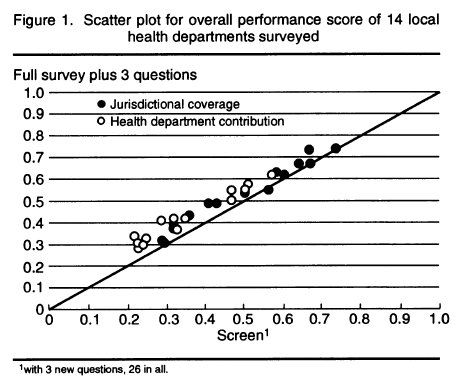
A screening survey to assess local public health performance

This scatter plot, from Miller, Moore, Richards, and McKaig, shows the correlation between survey responses and screening queries for an assessment of local public health performance.
Public Health Reports: Scatter Plot

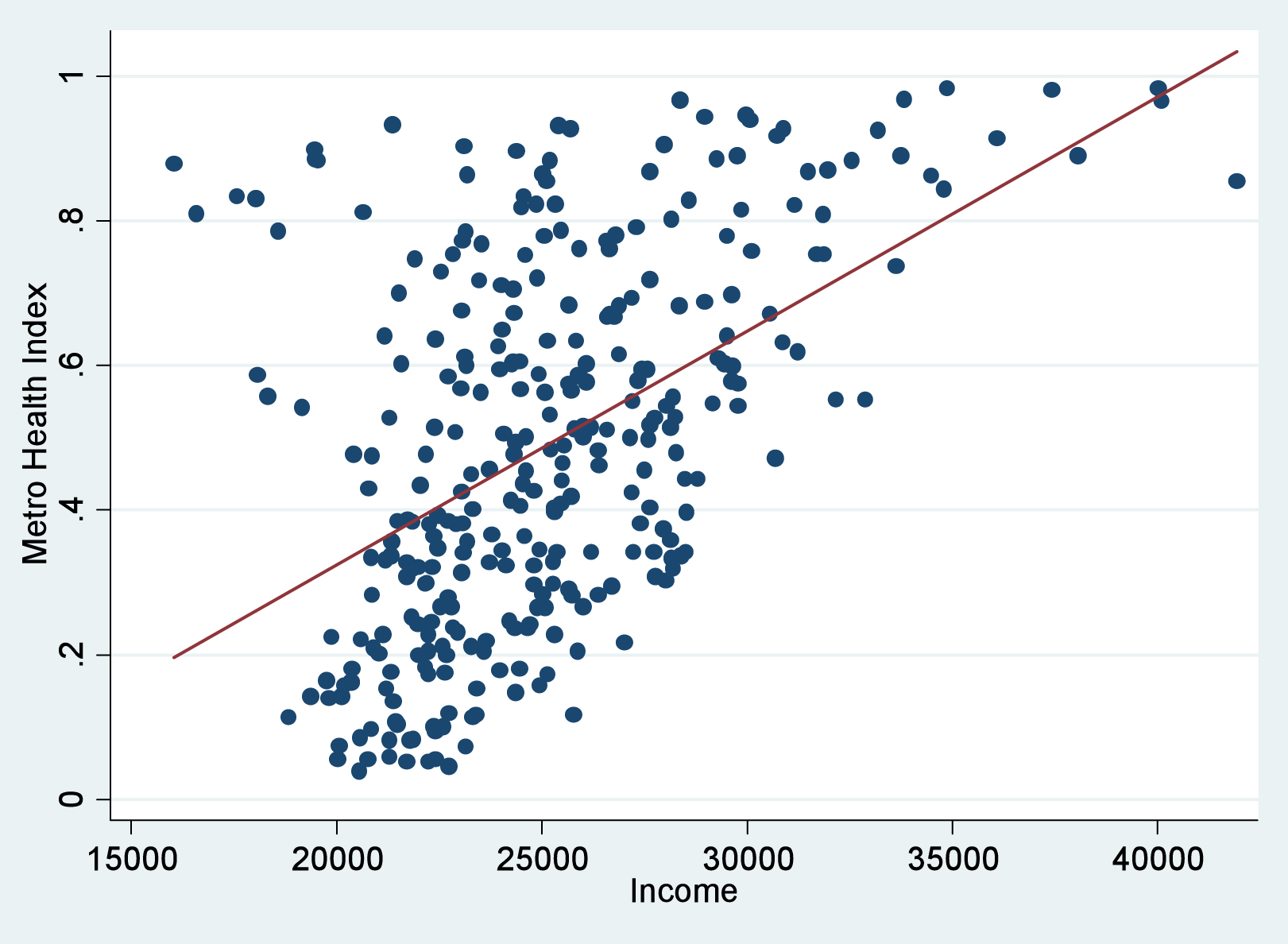
Why some cities are healthier than others

This scatter plot from The Atlantic Cities (2012) plots a city's "Metro Health Index" (a factor measuring the share of people who smoke or are obese) as it correlates to the city's median income. Note that the plot does not prove causation between income and health in this instance—just that the two are related.
Scatter Plot: The Atlantic Cities

More information

What is a Scatter Diagram?
American Society for Quality

Scatter Plot
NIST/SEMATECH e-Handbook of Statistical Methods

Source

Public Health Memory Jogger
Public Health Foundation, GOAL/QPC

Tags
  • public health practice
Last Updated: 07/24/2025
  • Facebook
  • X
  • Instagram
  • LinkedIn
  • Youtube

About MDH

  • About Us
  • Grants and Loans
  • Advisory Committees

Legal & Accessibility

  • Privacy Policy
  • Equal Opportunity
  • Feedback Form

Careers at MDH

This is an official website of the State of Minnesota. Visit Minnesota.gov for more information.