

Perinatal Health Data Dashboard
Fetal Deaths Overview
Perinatal Health Data Homepage
Quicklinks:
Interactive data on fetal deaths
Data over time
By cause of death
By number of fetuses in pregnancy
By maternal age
Time between pregnancies
By body mass index (BMI)
Resources
Fetal death (also known as a stillbirth) occurs when a fetus of at least 20 weeks gestation dies before birth. Gestation is the age of the fetus.
The timing of fetal death is separated into two categories:
- Early: between 20-27 weeks gestation
- Late: 28 weeks gestation or more
There are many reasons a fetus may die before birth. In Minnesota, most of the time the leading cause of death is unspecified (unknown). When the leading cause of death is known, it is most often due to:
- Placental, cord, and membrane complications
- Congenital malformations or birth defects
A miscarriage is when a fetus dies before 20 weeks gestation. Miscarriage data is not included.
Data over time
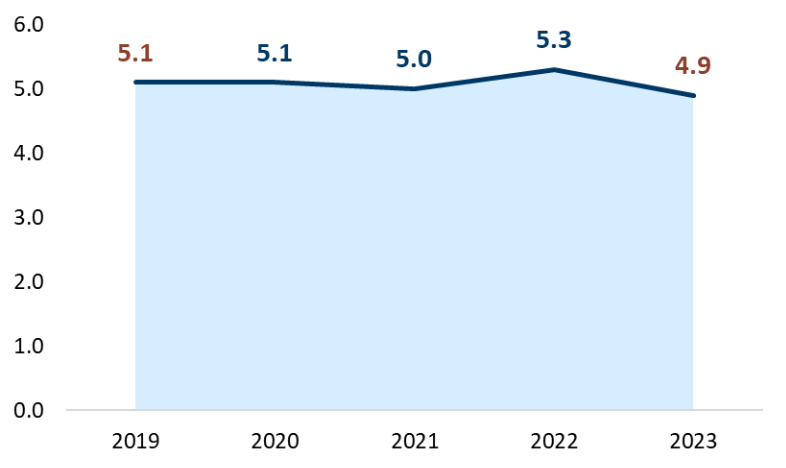
The rate of fetal deaths per 1,000 live births and fetal deaths in Minnesota decreased by 3.9% from 2019 to 2023.
Source: Minnesota resident birth and fetal death file, 2019-2023
- Minnesota: In 2023, 304 fetuses at 20 weeks gestation or more died before birth. About five fetal deaths occurred for every 1,000 live births and fetal deaths (rate of 4.9 per 1,000).
- United States: In 2023, 20,005 fetuses of 20 weeks gestation or more died before birth. About six fetal deaths occurred for every 1,000 live births and fetal deaths (rate of 5.53 per 1,000).
By cause of death
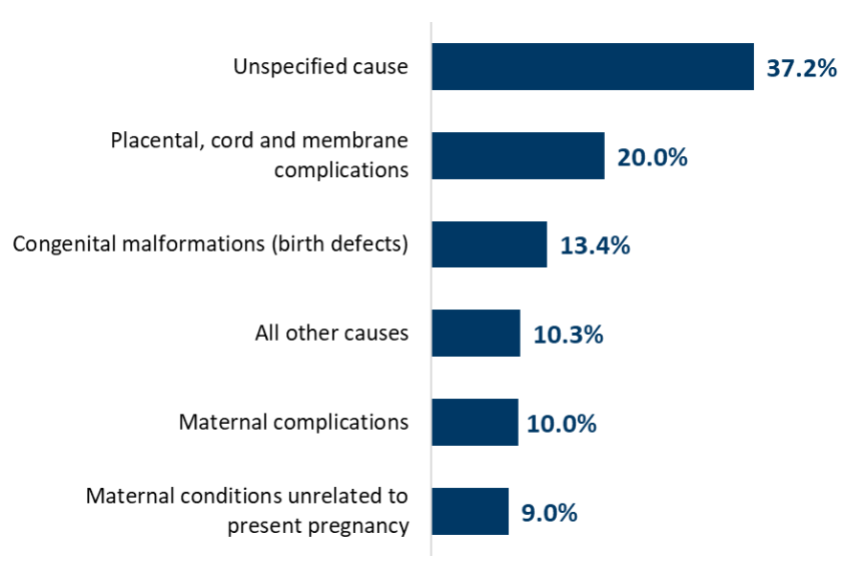
Fetal death data often combines multiple years of data to have large enough numbers to report. From 2019 to 2023, 1,626 fetal deaths occurred at or after 20 weeks gestation in Minnesota. The figure below shows the causes of fetal death.
One in three (37.2%) fetal deaths in Minnesota were due to an unspecified cause from 2019-2023.
Source: Minnesota resident birth and fetal death file, 2019-2023
Download: The percent of fetal deaths in Minnesota by cause of death, 2019-2023 (CSV).
From 2019 to 2023:
- 20 out of 100 fetal deaths were due to placental, cord and membrane complications.
- 13 out of 100 fetal deaths were due to congenital malformations or birth defects.
By number of fetuses in pregnancy
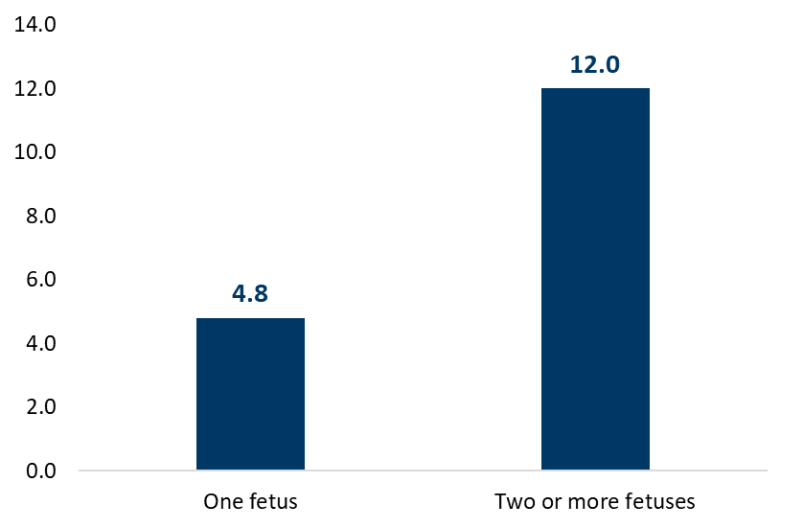
The rate of fetal death is higher when there are two or more fetuses in a pregnancy.
The risk of fetal death is almost three times higher for pregnancies with two or more fetuses compared to pregnancies with one fetus, 2019-2023.
Source: Minnesota resident birth and fetal death file, 2019-2023
By maternal age
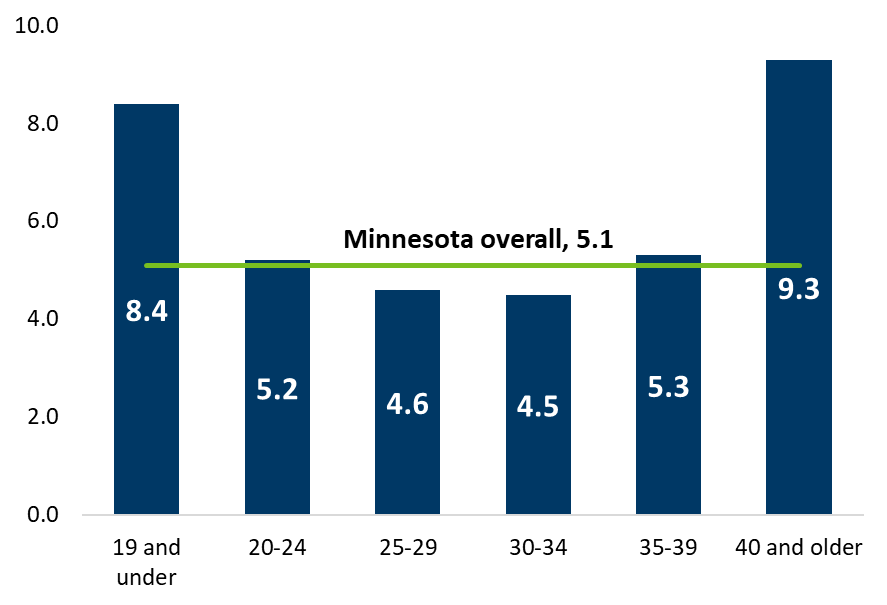
The risk of fetal death is higher for mothers/birthing parents who are 19 years old and under or 40 years old and older.
Mothers/birthing parents who were 40 years old and older, or 19 years old and under, were more likely to experience a fetal death, 2019-2023.
Source: Minnesota resident birth and fetal death file, 2019-2023
From 2019-2023:
- Mothers/birthing parents who were 40 years old and older had the highest rate of fetal death at 9.3 per 1,000 live births and fetal deaths.
- Mothers/birthing parents who were 19 years old and under had the second highest rate of fetal death at 8.4 per 1,000 live births and fetal deaths.
- The overall rate of fetal death in Minnesota was 5.1.
Time between pregnancies
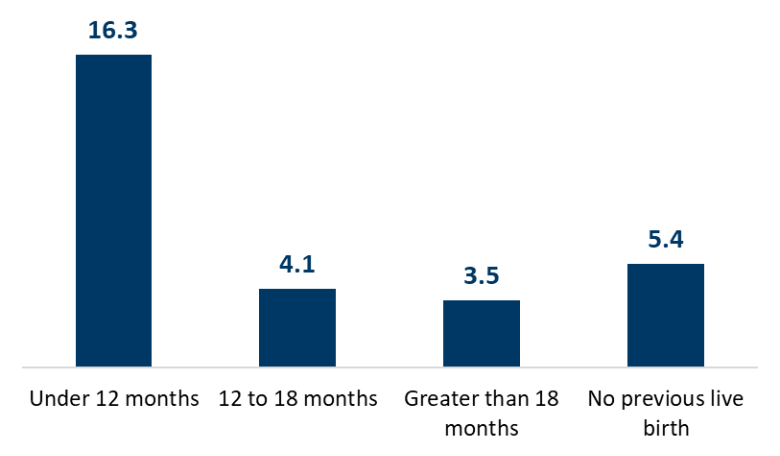
A short amount of time between pregnancies increases the risk of fetal death. The rate of fetal death when there were fewer than 12 months between pregnancies is three to four times higher than the risk of fetal death for any other time frame between pregnancies, including when a person had no previous live births
Pregnancies that occurred less than 12 months after a previous pregnancy had the highest risk of fetal death with a rate of 16.3 per 1,000 live births and fetal deaths, 2019-2023.
Source: Minnesota resident birth and fetal death file, 2019-2023
By body mass index
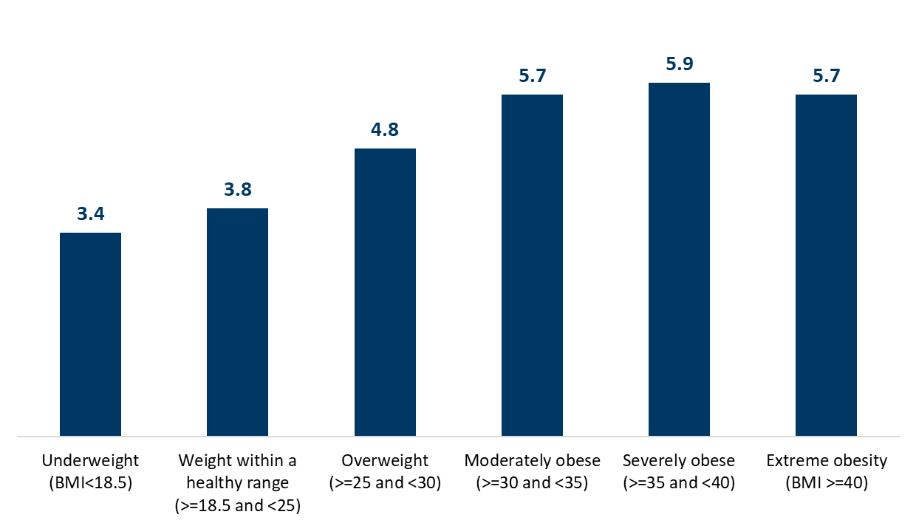
In Minnesota, mothers/birthing parents with a higher body mass index before pregnancy had a higher risk of having a fetal death, 2019-2023.
Source: Minnesota resident birth and fetal death file, 2019-2023
The body mass index (BMI) of a mother/birthing parent before they are pregnant can affect their risk of having a fetal death.
From 2019 to 2023, in Minnesota:
- Mothers/birthing parents who were moderately, severely, or extremely obese before pregnancy had a 50% higher risk of having a fetal death than someone who had a weight within a healthy range prior to pregnancy.
- Mothers/birthing parents who were overweight before pregnancy had a 25% higher risk of having a fetal death than someone who had a weight within a healthy range prior to pregnancy.
Resources
See more by going to the interactive data.
Gregory ECW, Valenzuela CP, Hoyert DL. Fetal mortality: United States, 2023. Natl Vital Stat Rep; 2025 Jun;74(8):1-22. DOI: CDC: Fetal Mortality: United States, 2023 (PDF).