

Perinatal Health Data Dashboard
Infant Deaths Overview
Perinatal Health Data Homepage
Quick Links:
Interactive data on infant deaths
Data over time
By cause of death
By race/ethnicity
By prenatal care
Resources
Infant death occurs when a baby who was born alive, dies before their 1st birthday.
The age of the infant at the time of death is separated into two categories:
- Neonatal: When a baby dies between birth and 28 days.
- Postneonatal: When a baby dies between the ages of 29 to 364 days.
In Minnesota, most often the reason a baby may die before their 1st birthday is from being born too early (before 37 weeks gestation), which can cause health issues. The next most common causes of death are congenital anomalies (birth defects).
Data over time
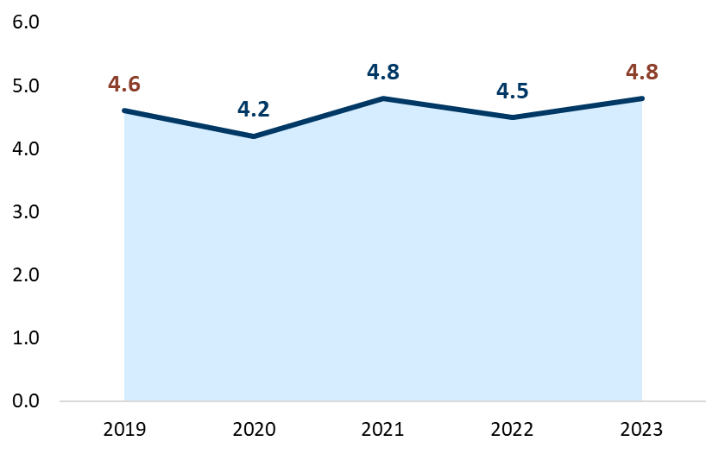
The rate of infant deaths per 1,000 live births in Minnesota increased by 4.3% from 2019 to 2023.
Source: Minnesota resident infant death period cohort file, 2019-2023
Download: The rate of infant deaths per 1,000 live births in Minnesota, by year, 2019-2023 (CSV).
- Minnesota: In 2023, 294 babies died before their 1st birthday. Nearly five babies died for every 1,000 who were born alive (rate of 4.8 per 1,000).
- United States: In 2023, an estimated 20,162 babies died before their 1st birthday. Almost six babies died for every 1,000 who were born alive (rate of 5.6 per 1,000).
By cause of death
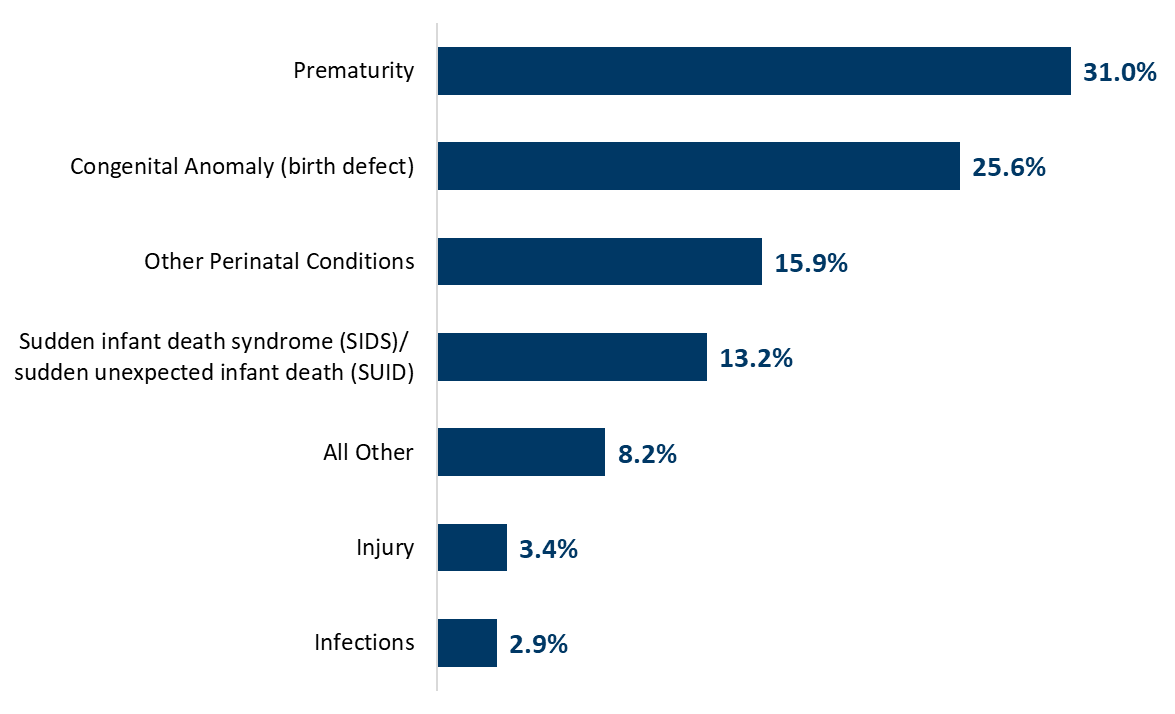
Infant death data often combines multiple years of data to have large enough numbers to report. From 2019 to 2023, 1,460 babies died in Minnesota before they turned 1-year-old. The figure below shows the causes of infant death.
Prematurity and congenital anomalies (birth defects) caused more than 56% of infant deaths in Minnesota from 2019 to 2023.
Source: Minnesota resident infant death period cohort file, 2019-2023
Download: The percent of infant deaths in Minnesota by cause of death, 2019-2023 (CSV).
From 2019 to 2023:
- 31 out of 100 infant deaths were due to prematurity, meaning the baby was born too early.
- 26 out of 100 infant deaths were due to congenital anomalies or birth defects.
By race/ethnicity
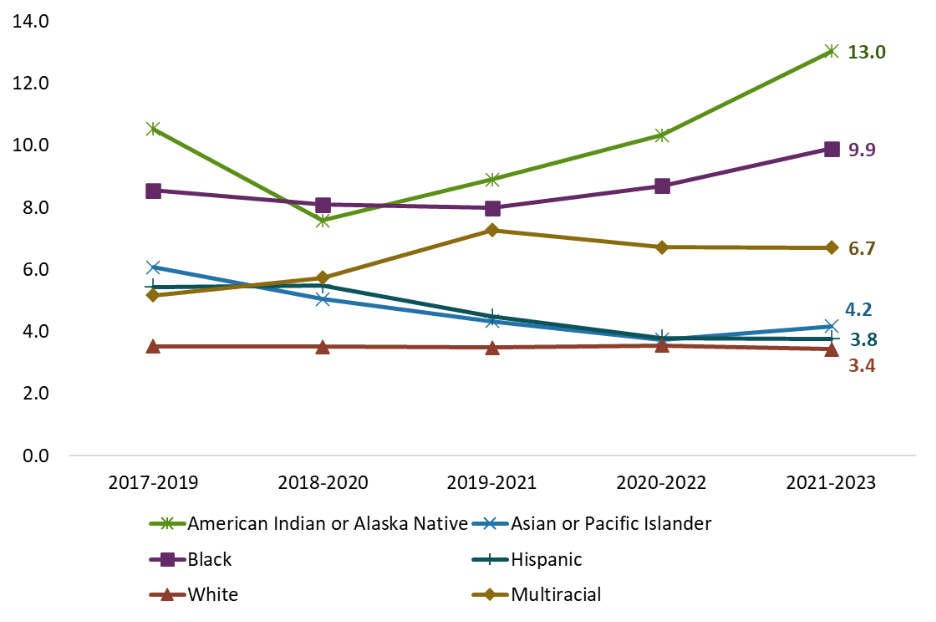
The rate of infant death in Minnesota is highest among babies born to American Indian or Alaska Native and Black mothers/birthing parents.
Babies born to both American Indian or Alaska Native and Black mothers/birthing parents experienced the highest rates of infant deaths in 2021-2023 and largest rate increases since 2019-2021.
Source: Minnesota resident infant death period cohort file, 2017-2023
Download: The rate of infant deaths per 1,000 live births in Minnesota, by race/ethnicity, 2017-2023 (CSV).
- The rate of infant deaths was highest for babies born to American Indian or Alaska Native mothers/birthing parents. Their rate of 13 per 1,000 live births in 2021-2023 was almost three times higher than the overall state rate of 4.7.
- The rate of infant deaths for babies born to Black mothers/birthing parents was the second highest at 9.9 per 1,000 live births in 2021-2023. Their rate was more than two times higher than the overall state rate of 4.7.
By prenatal care
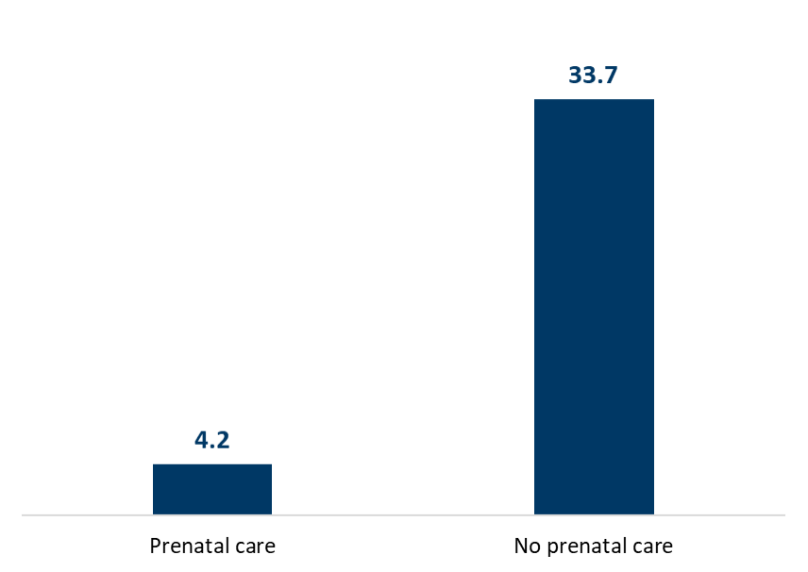
The risk of infant death is higher for mothers/birthing parents who did not receive any health care during their pregnancy, also known as prenatal care.
Infants born to mothers/birthing parents who received no prenatal care are eight times more likely to die before 1 year of age than infants born to mothers who received prenatal care, 2019-2023.
Source: Minnesota resident infant death period cohort file, 2019-2023
- 33 out of 1,000 babies die before their 1st birthday when their mother/birthing parent does not receive prenatal care.
Even when mothers/birthing parents receive prenatal care, the rate of infant deaths increases when prenatal care is started later during the pregnancy.
The later during a pregnancy that prenatal care is started increases the risk that an infant will die before their 1st birthday, 2019-2023.
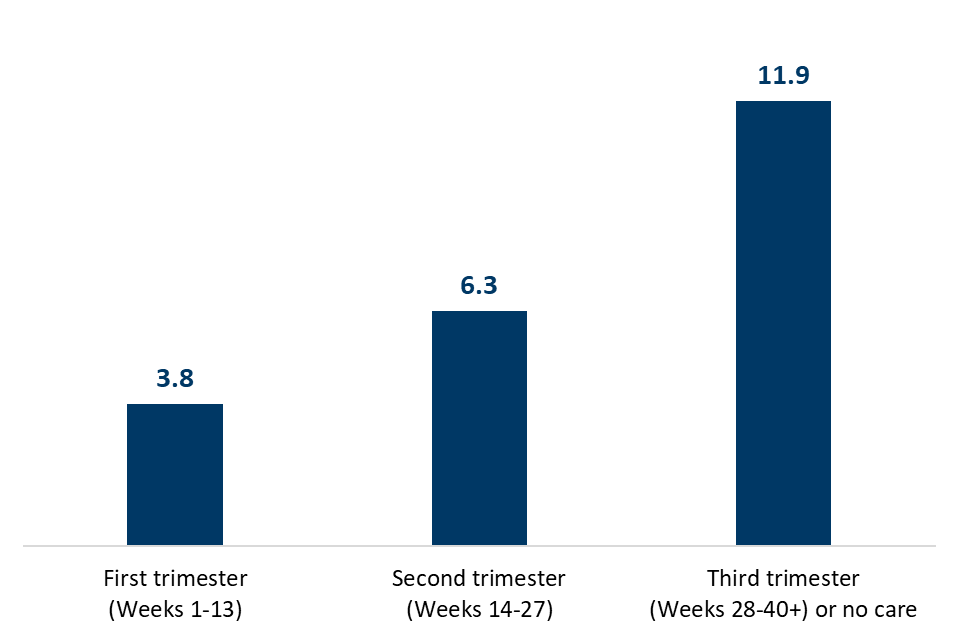
Source: Minnesota resident infant death period cohort file, 2019-2023
Compared to infants whose mothers/birthing parents started prenatal care during their first trimester:
- Infants are three times more likely to die before their 1st birthday when their mother/birthing parent starts prenatal care during the third trimester or receives no prenatal care.
- Infants are one and a half times more likely to die before their 1st birthday when their mother/birthing parent starts prenatal care during the second trimester.
Resources
See more by going to the interactive data.
Ely DM, Driscoll AK. Infant mortality in the United States, 2023: Data from the period linked birth/infant death file. Natl Vital Stat Rep. 2025 Jun;74(7):1-20. DOI: CDC: Infant Mortality in the United States, 2023: Data From the Period Linked Birth/Infant Death File (PDF)