
2026 Public Health Laboratory Newsroom
Meet the Scientist: Infectious Disease Lab Scientist Annah Schneider
The Infectious Disease Laboratory, a section of the Minnesota Public Health Laboratory, works with some of the world’s most dangerous pathogens. For example, it is one of only seven United States public health labs that culture the bacterium Bordetella pertussis, which causes the vaccine-preventable disease pertussis, aka whooping cough. While many labs can test samples for Bordetella pertussis, the Minnesota Public Health Laboratory’s culturing methods enable it to make new insights, such as discovering other Bordetella species that are causing similar symptoms.
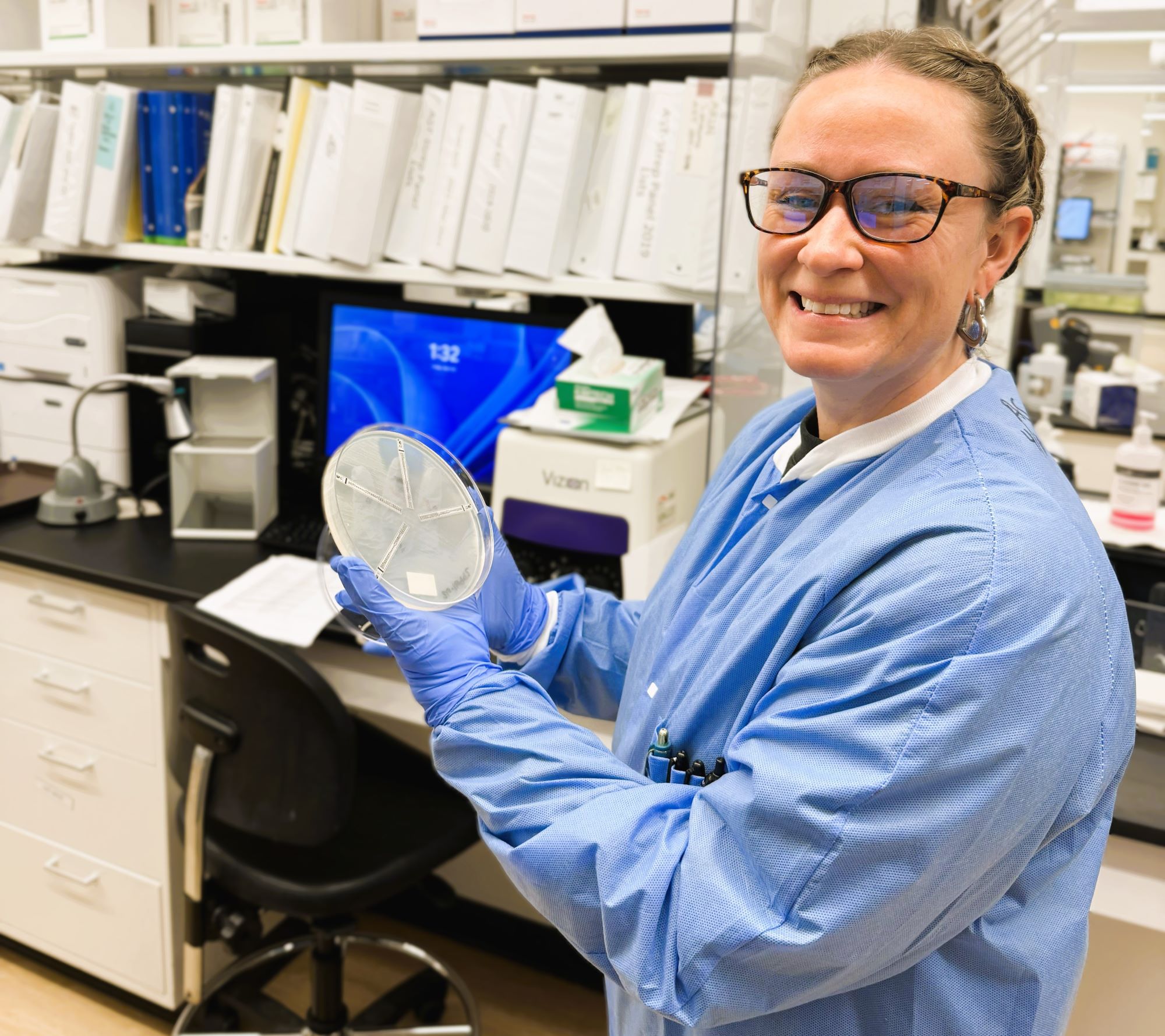 Annah Schneider is one of the laboratory scientists responsible for culturing Bordetella pertussis from patient samples. This work not only helps with diagnoses; it also enables epidemiologists in the Minnesota Department of Health to track the spread of pertussis.
The standard treatment for pertussis is antibiotics, particularly azithromycin. However, bacteria can evolve to become resistant to specific antibiotics. Schneider also analyzes Bordetella pertussis specimens to discover whether antibiotics may become no longer effective. By catching early signs of antibiotic resistance, the lab can help hospitals and clinics adapt their treatments and stay ahead of the bacteria.
Launching a career in science
Annah Schneider began her college career studying music education but switched to veterinary science. She became especially interested in microbiology and biotechnology.
After graduating, Schneider worked at the Veterinary Diagnostic Laboratory at the University of Minnesota - Twin Cities. She tested milk for the bacteria that can cause mastitis. This work also involved antimicrobial susceptibility testing, i.e., trying different treatments on pathogens to see what combats them best.
Working in the Minnesota Public Health Laboratory
Schneider’s work in antimicrobial susceptibility testing led to her current position as a laboratory scientist in the Microbiology Unit of the Minnesota Infectious Disease Laboratory. Clinics and hospitals send samples from patients to the Microbiology Unit. Schneider and her colleagues test the samples for Bordetella pertussis and other pathogens.
If a test is positive, Annah and her colleagues run quick tests on the bacteria to determine if they have become resistant to standard treatments. The Minnesota Public Health Laboratory also conducts whole-genome sequencing on microbes to provide more information about possible antimicrobial resistance. The results are shared with the Centers for Disease Control and Prevention (CDC), which coordinates any necessary changes in antibiotic prescriptions and treatment algorithms.
Schneider also works with samples suspected to contain carbapenem-resistant bacteria that pose particular threats to long-term-care facilities, as well the bacteria responsible for gonorrhea. For gonorrhea and other diseases, the Microbiology Unit’s test results often help direct treatment. If the antibiotic typically used to treat gonorrhea, ceftriaxone, shows a resistant result in a patient’s sample, the hospital or clinic will know to try a different antibiotic.
For several diseases, test results created by Schneider and her colleagues can also guide prophylaxis, the set of protections used by people who are in contact with an infected person. Prophylaxis is critical for avoiding meningitis, a very dangerous condition that can be caused by many different bacteria, viruses, and fungi. By discovering the specific pathogen responsible in a case, the Minnesota Department of Health can advise health care professionals on which medications to administer.
During the height of the COVID-19 pandemic in 2020, Schneider was one of many Minnesota Public Health Laboratory scientists who spent evenings and weekends handling samples for COVID-19 testing. The lab was the first in the state able to analyze COVID-19 tests. The Minnesota Public Health Laboratory is a rare and valuable resource, full of scientists and specialized equipment capable of quickly pivoting to meet new infectious disease threats.
Return to the 2026 Public Health Laboratory Newsroom.