Emerging Contaminants Unit
A unit in the Environmental Laboratory, a section of the Minnesota Public Health Laboratory
The Emerging Contaminants Unit, part of the Environmental Laboratory at the Minnesota Public Health Laboratory, was established in 2024 as a result of funding through the Clean Water Fund from the Clean Water, Land & Legacy Amendment. The unit tests for emerging contaminants in environmental samples.
Emerging contaminants (or contaminants of emerging concern) are synthetic or naturally occurring chemicals—such as PFAS, pharmaceuticals, and personal care products—not commonly monitored in the environment but suspected of causing ecological or human health impacts. They are often unregulated, recently discovered, or newly detected due to improved technology.
The Emerging Contaminants Unit analyzes for per- and polyfluoroalkyl substances (PFAS) in drinking water, non-potable water, and fish tissues. It also tests water samples for unregulated emerging contaminants by both targeted and non-targeted methods.
PFAS testing
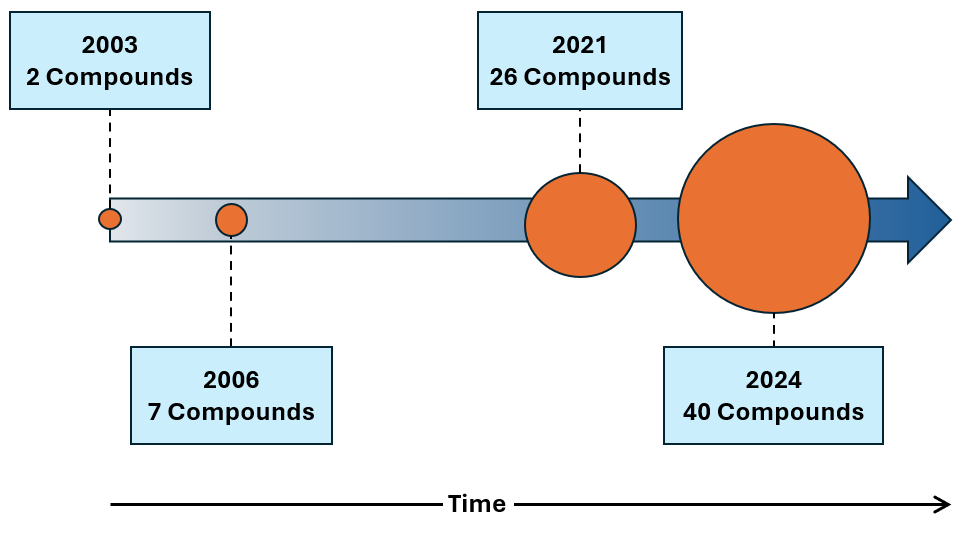
The Laboratory began testing for PFAS in 2003 with an in-house developed method looking for just two analytes, or compounds of interest. Capabilities have expanded over the years, increasing the number of analytes being measured and increasing the sensitivity of the methods. Currently, the laboratory analyzes drinking water samples by EPA Method 533 looking for 26 compounds and non-potable waters and fish by EPA Method 1633 looking for 40 compounds.
Data generated by the unit for PFAS in drinking water is used to support the Interactive Dashboard for PFAS Testing in Drinking Water for the Minnesota Department of Health. Data generated by the unit for PFAS in fish tissue is used to support the Fish Consumption Guidance program with the Minnesota Department of Health. The PFAS data also helps support Minnesota’s PFAS Blueprint authored by the Minnesota Pollution Control Agency.
Method development was performed in 2025 to streamline PFAS in fish testing in an effort to reduce sample preparation time from 1 ½ days to under 8 hours through a semi-automated sample extraction.
Unregulated emerging contaminants
Funding through the Clean Water Fund allows the Unit to develop methods and perform testing for both targeted and non-targeted analysis of emerging contaminants.
Current non-targeted methods use suspect compound lists and national databases of chemical information to detect hundreds of PFAS analytes and pesticides.
The unit has partnered with Minnesota Pollution Control Agency, the Drinking Water Ambient Monitoring Program at the Minnesota Department of Health, St. Thomas University, and Hamline University on projects for targeted and non-targeted analysis.
The unit welcomes continued and future collaborations in helping programs and projects identify contaminants of emerging concern.
Emerging contaminants Newsroom story:
Water Contaminants Emerging in Wake of PFAS