

Minnesota All Payer Claims Database
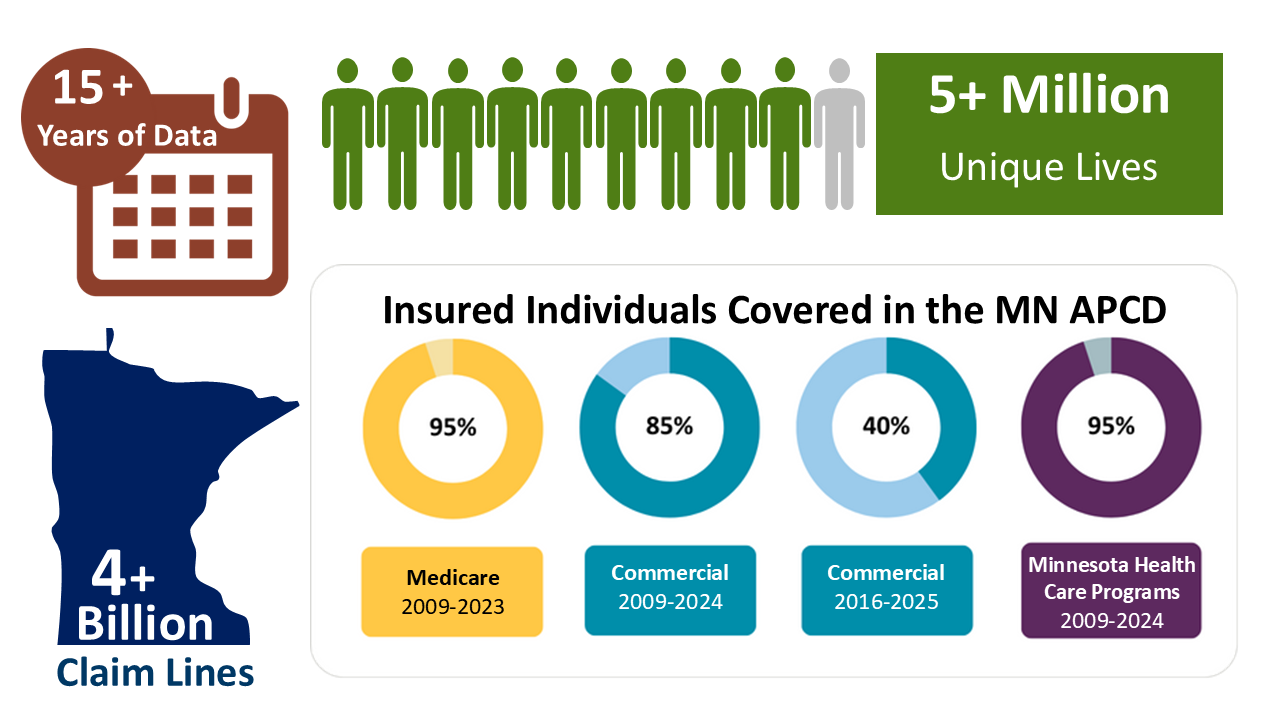
In 2008, Minnesota passed legislation to develop the Minnesota All Payer Claims Database (MN APCD), a secure, statewide database of de-identified healthcare claims data that consists of billing records sent by medical providers to insurance companies, plan administrators, and public payers.
The MN APCD represents a comprehensive view of health care in Minnesota, including claims by nearly all public and most private payers. The MN APCD offers a unique opportunity to conduct research, learn about the healthcare services and prescription drugs provided across the state. In addition, the MN APCD is useful in enhancing our understanding of the cost of care, impacts on health outcomes, and informing state health policy related to healthcare cost, quality, access, and system design.
The Health Economics Program at the Minnesota Department of Health is legislatively directed to collect, maintain, and expand access to the MN APCD under Minnesota Statutes, section 62U.04.
What are healthcare claims data?
Every time you visit a doctor, hospital, or clinic, the facility creates a claim to ask for payment. Healthcare claims data is a record of the bills sent to insurance companies after you receive care. This document lists standard codes for the services you received, where you were seen, and the date of your visit.
Similar to the “Explanation of Benefits” you receive in the mail, a claim shows what the doctor charged, what the insurance agreed to pay, and any costs you owe—like a deductible. However, claims do not include private details like your test results, doctor’s notes, or conversation records.
View the latest
MN APCD news, dashboards, reports, and more.
Explore the Data (Coming soon)

Learn how to voluntarily submit data to the MN APCD.
View Employer Resources

Download Public Use Files and request access to MN APCD Data Sets.
Access & Request Data (Coming soon)