
Infant Mortality Reduction Initiative
- Infant Mortality Reduction Home
- Grant to Prevent Sleep-Related Infant Deaths
- SUID/SIDS
- MN Infant Safe Sleep Collaboration
- Safe Sleep Certified Hospitals and Birth Centers
- Shaken Baby Syndrome
- Grief and Loss Support
- Preterm Birth
- Healthy Beginnings Healthy Families: Infant Health
Related Programs
Identifying Signs of Physical Abuse in Babies
Under Minnesota Statute 144.124, family practice physicians, pediatricians, and other primary care providers must provide parents and primary caregivers of infants up to six months of age with resources on how to recognize signs of physical abuse and how to report suspected physical abuse.
The information below provides resources for providers to help educate parents and caregivers on how to identify potential signs of physical abuse in babies up to six months of age and how to report suspected abuse.
Possible warning signs of physical abuse
Some injuries in babies can be a warning sign for a medical issue or possible physical abuse. These are injuries that are not common in babies under 6 months old since they cannot move around on their own and injure themselves. If you notice any of the signs below, get medical care right away.
Bruises or skin injuries
Any bruises on a baby who is not yet moving is concerning.
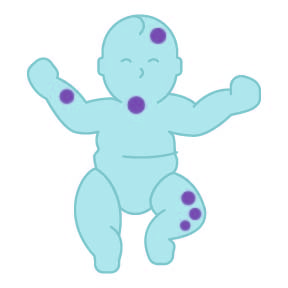
Signs to watch for:
- Bruises anywhere on the body.
- Scratches, bite marks, or unusual marks on the skin.
- Mouth or facial injuries, such as bleeding from the mouth, nose, or eyes.
These should always be checked by a medical provider.
Abusive head trauma
Abusive head trauma (sometimes called Shaken Baby Syndrome) happens when a baby is shaken hard. This can cause brain damage, serious injury, or death.
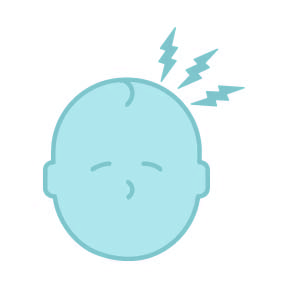
Signs to watch for:
- Not responding to touch, sounds, or voices.
- Trouble staying awake.
- Vomiting (more forceful than spit up).
- Eating less than usual.
- Pale or unusual skin color.
- Seizures.
- Crying much more than usual and can’t be comforted.
Get medical help right away if your baby has any of these signs. Call 9-1-1 if it is an emergency, otherwise, go to urgent care or the emergency room.
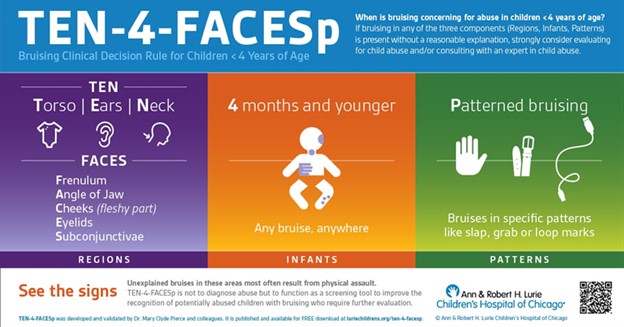
Source: Ann & Robert H. Lurie Children's Hospital of Chicago
Resources for healthcare providers and clinics
Fact sheet
Providers and clinics can share the fact sheet below with parents and caregivers to help them identify signs of abuse infants.
Social media toolkit
Providers and clinics can share the below social media text and graphics to help families and patients learn about the resources available and how to identify signs of abuse infants.
Social media text:
Accidents happen, but some injuries in babies under 6 months are warning signs of a medical issue or abuse.
Watch for bruises or unusual marks, mouth or facial injuries, seizures, unresponsiveness, or trouble staying awake. If something doesn’t seem right, seek medical care right away or call 9-1-1 in an emergency.
Learn more on the Minnesota Department of Health’s identifying signs of physical abuse in babies webpage www.health.state.mn.us/people/womeninfants/infantabuse.html.
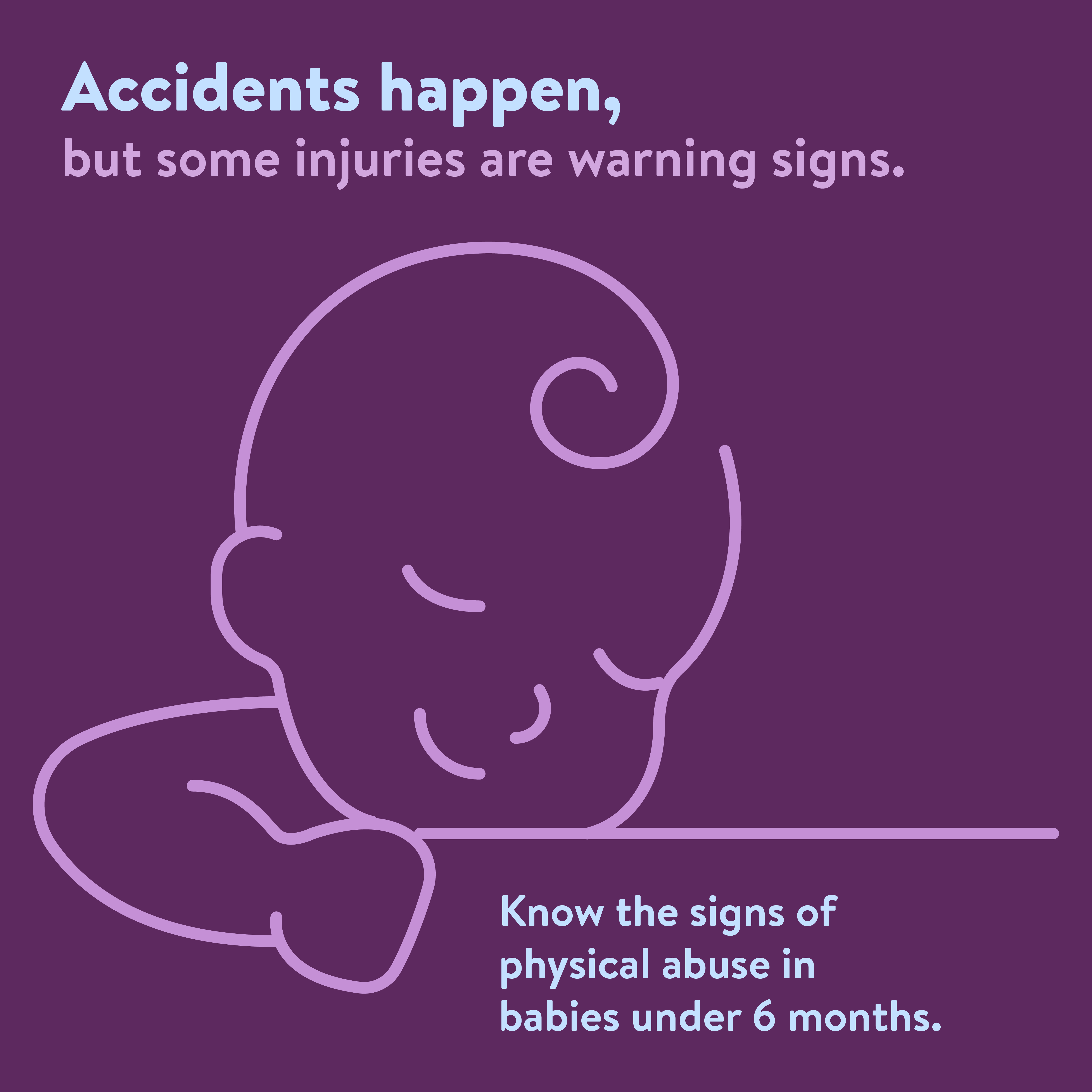
Download the graphic for social media.
If you think your baby may be abused, you can report it.
- Contact the county or Tribal social services agency where your baby lives. A list can be found on the Minnesota Department of Children, Youth, and Families Directory of County and Tribal Child Protection Agencies webpage.
- To report suspected abuse in licensed and certified childcare centers, contact the Minnesota Department of Children, Youth, and Families, Intake Line: 651-539-8222 or email dcyf.licensingintake@state.mn.us.
- Community Resource Centers are a local hub that provides culturally responsive, relationship-based support and service navigation for expecting and parenting families and youth.
- Family Home Visiting is a voluntary, home-based service ideally delivered during pregnancy through the early years of a child's life. It provides social, emotional, health-related and parenting support and information to families and links them to resources.
- Help Me Connect is a resource portal for expecting and parenting families with young children, and those working with them.
- National Maternal Mental Health Hotline, 1-833-TLC-MAMA is a free, confidential resource for pregnant people and parents. Counselors listen, provide support, and help make connections to local resources and other healthcare professionals.
- Parent Support Outreach Program is a voluntary, early intervention program that focuses on a family’s strengths and needs and aims to help children and parents thrive.
- TEN-4-FACESp (PDF) is a screening tool used to identify concerning bruises in children that may indicate physical abuse.